Enterprise Security
Enterprise Security
Enterprise Platform Security Built for Review
GlobeArc can hold detailed information about how an organization is structured and how work is performed, including applications, processes, capabilities, technology relationships, organizational dependencies, vendor exposure, and transformation plans. Taken together, that connected information can be highly sensitive, so GlobeArc applies security controls across identity, authorization, tenant isolation, infrastructure, and AI access.
GlobeArc is built as a modern multi-tenant SaaS platform with schema-level tenant separation, standards-based authentication, API-enforced role permissions, and scoped access for AI-assisted workflows. These controls protect the shared Enterprise Architecture and Business Process Management foundation rather than treating process and architecture data as separate security domains.


How Does GlobeArc Secure Connected Enterprise and Process Data?
Security is applied at several layers rather than relying on a single login boundary. GlobeArc combines tenant data isolation, authenticated access, role-based authorization, network and platform controls, and controlled deployment practices.
Key controls include:
- Schema-per-tenant data isolation
- OIDC-based authentication
- Role-based access control
- API-level authorization enforcement
- Scoped AI and MCP access
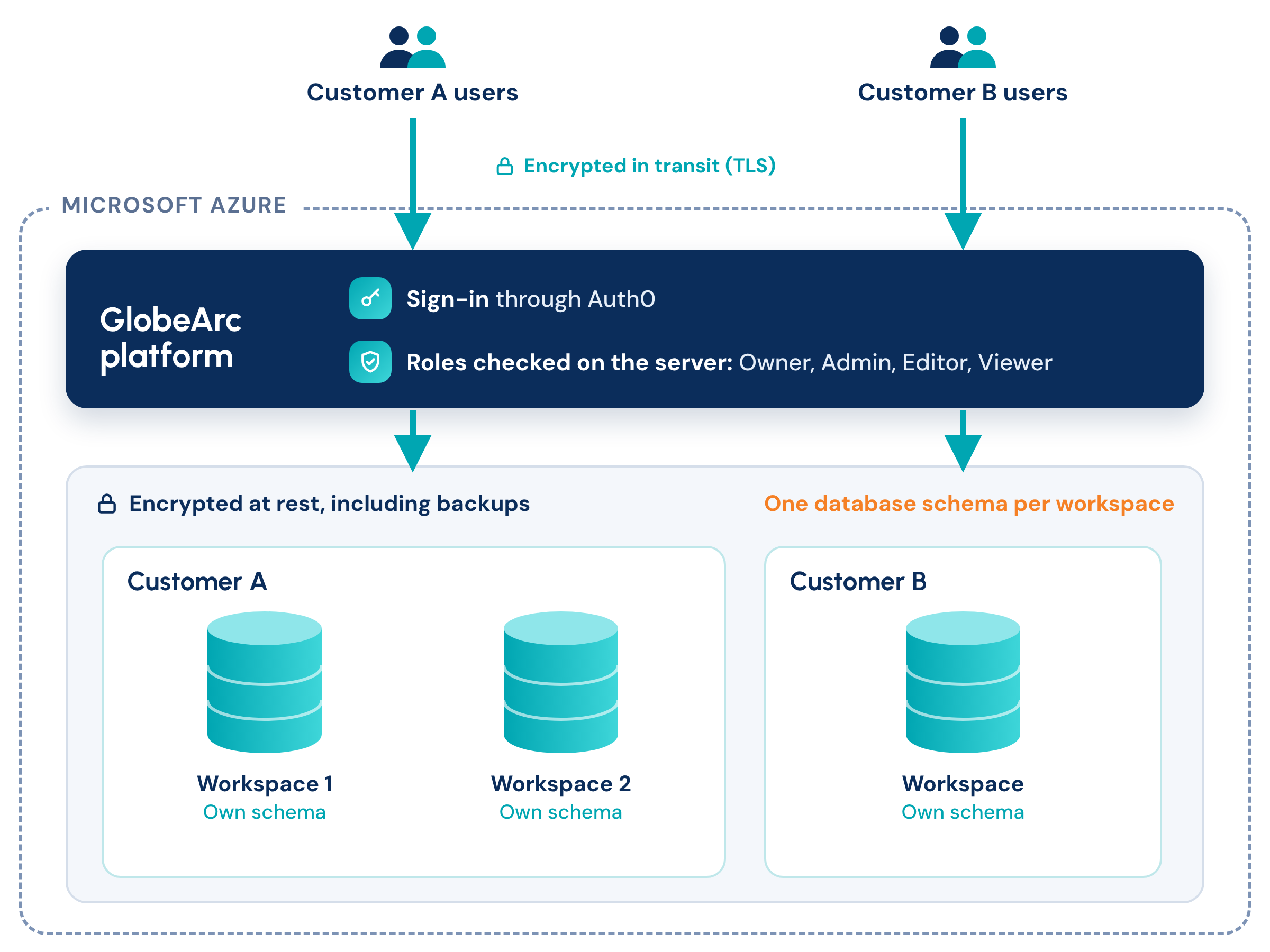
- Encryption in transit (TLS) and at rest
- Infrastructure managed as code
- Automated testing and deployment controls
- Cloud-native monitoring and observability
These controls are designed to work together. Authentication establishes who a user is, authorization determines what that user can do, and tenant isolation limits where their data resides.
How Is Customer Data Isolated?
GlobeArc uses a schema-per-tenant database architecture. Each customer workspace is assigned its own database schema rather than storing every customer's records together in shared tables differentiated only by a tenant identifier.
This creates an additional structural boundary between customer datasets. Tenant resolution happens as requests are processed, and database migrations are applied independently to tenant schemas so each workspace follows the same controlled schema lifecycle.
Schema-per-tenant isolation doesn't mean every customer receives a separate database server or dedicated infrastructure. It means customer data is separated at the database-schema level within GlobeArc's multi-tenant architecture, providing a stronger boundary than relying exclusively on row-level filtering.
Does GlobeArc Support Enterprise Single Sign-On?
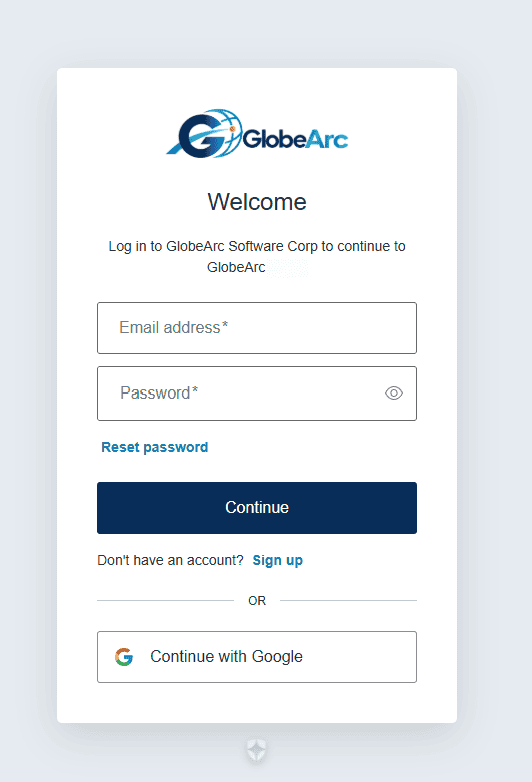
GlobeArc uses OpenID Connect, or OIDC, for authentication. Auth0 provides the default identity service, and GlobeArc’s identity architecture is designed to support customer-managed identity through standards-compliant OIDC providers, including:
- Microsoft Entra ID
- Okta
- PingFederate
- Auth0
- Other standards-compliant OIDC identity providers
This allows organizations to align GlobeArc authentication with their existing identity strategy rather than introducing another independent username and password system.
How Does Role-Based Access Control Work?
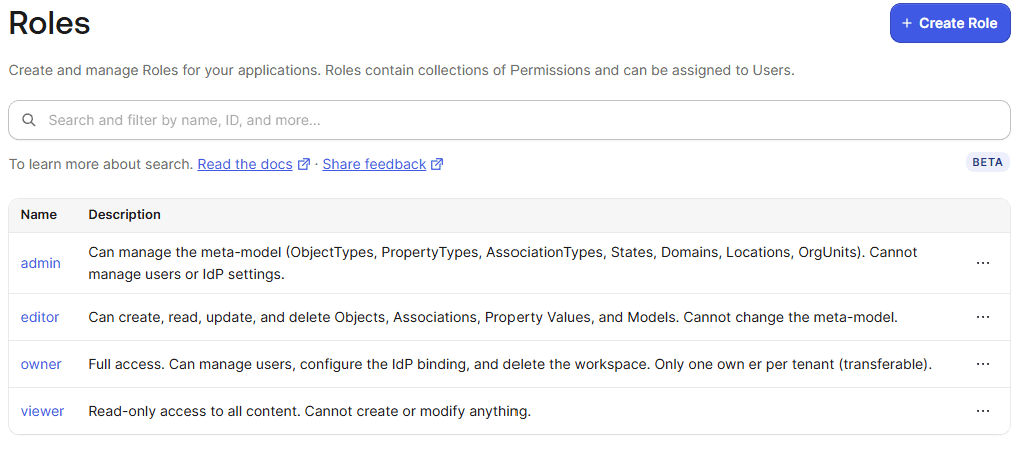
GlobeArc uses four application roles: owner, admin, editor, and viewer. Permissions associated with these roles are enforced by the backend API rather than relying only on which controls the frontend displays.
That distinction matters. Hiding an edit button isn't a security boundary. GlobeArc checks authorization on protected API operations so a user can't gain additional permissions simply by bypassing the application interface or constructing a request directly.
Role-based access works alongside tenant context and authentication, allowing GlobeArc to evaluate who the user is, which workspace they belong to, and what operations their assigned role permits.

How Does GlobeArc Protect Authentication Tokens?
GlobeArc's authentication architecture uses short-lived access tokens and rotating refresh tokens. These controls reduce reliance on long-lived credentials and ensure that tokens presented to GlobeArc are intended for the platform.
How is AI Access Secured?
AI access shouldn't create a second security model. GlobeArc's MCP architecture is designed so AI-assisted access continues to operate through authenticated, permission-aware platform services rather than connecting an agent directly to the database.
For architecture queries, GlobeArc uses a dedicated OAuth scope and a read-only query pathway. The MCP service doesn't hold its own database connection, and AI-generated requests don't execute raw SQL or GraphQL against customer data. Queries pass through GlobeArc's validated query architecture before execution.
Existing protections remain relevant when AI is introduced:
- The user or client must authenticate.
- OAuth scopes constrain the permitted operation.
- Tenant boundaries remain enforced.
- Role and platform permissions remain part of the request path.
- Read-only query access doesn't automatically inherit general write privileges.
- AI-generated database query language isn't executed directly.
This means an AI assistant becomes another controlled interface to GlobeArc rather than a route around its security model.


Why Are AI Querying and AI Modeling Permissioned Separately?
Reading architecture information and changing it carry different levels of risk. GlobeArc therefore separates its read-only query pathway from the process-modeling pathway rather than granting a connected AI client general-purpose write access.
Architecture queries use a dedicated read scope. AI-assisted BPMN import uses a separately permissioned process-specific write pathway and validates the proposed model before persistence. This keeps the permission boundary narrow and makes it possible to authorize one type of AI interaction without automatically authorizing another.

How is GlobeArc Deployed in the Cloud?
GlobeArc is hosted on Microsoft Azure as a cloud-native, multi-tenant SaaS platform rather than an on-premises application moved unchanged into hosted infrastructure. Sign-in and authentication are handled through Auth0.
Connections to GlobeArc are encrypted in transit using TLS, and stored data and backups are encrypted at rest.
Infrastructure is defined and version-controlled as code, with separate environments and automated deployments rather than manual changes.

How is GlobeArc Monitored?
GlobeArc uses Azure-native monitoring and structured application logging, giving the engineering team a centralized way to inspect application behavior and diagnose operational issues without operating a separate self-hosted monitoring stack.

How Can Procurement and Security Teams Review GlobeArc?
Enterprise security reviews often require architecture documentation, questionnaire responses, identity and data-isolation details, and clarification of controls that don't fit neatly into a standard vendor form. GlobeArc can work with procurement, information security, architecture, and third-party risk teams to provide the currently available technical evidence and answer platform-specific questions.
Security and procurement teams can send inquiries through GlobeArc's contact page, and the GlobeArc team will respond directly.
What Testing and Deployment Controls Does GlobeArc Use?
Security isn't limited to runtime controls. GlobeArc also applies quality and deployment checks during software delivery so changes are tested before they move through environments.
The current engineering controls include:
- Automated build and test pipelines
- Dependency monitoring
- Automated post-deployment smoke tests
- Approval-gated promotion between higher environments
- Infrastructure defined and version-controlled as code
These practices reduce reliance on manual deployment steps and create repeatable controls around changes to the platform.
What Security Information is Available for Platform Review?
Security teams typically need more than marketing claims before approving a platform that will contain architecture data. GlobeArc can support technical review with information covering areas such as:
- Platform and deployment architecture
- Data-flow architecture
- Tenant isolation
- Authentication and session design
- Authorization and role enforcement
- AI and MCP access controls
- Network and database architecture
- CI/CD and infrastructure controls
- Logging and observability
- Current security-hardening plans
Organizations evaluating GlobeArc should request the latest available security documentation as part of their procurement or third-party risk process. Documentation is kept current as the platform evolves.


What Should Security Teams Understand About GlobeArc?
GlobeArc's security model is built around several clear boundaries:
- Customer data is separated using schema-per-tenant architecture.
- Users authenticate through standards-based OIDC.
- Enterprise identity providers can be used through the customer identity path.
- Roles are enforced by the backend API.
- AI query access is separately scoped and read-only.
- AI clients don't receive direct database access.
- Infrastructure and deployment are managed through automated, version-controlled processes.
For a platform that connects Enterprise Architecture and Business Process Management, these boundaries matter. The repository can contain a detailed map of how an organization is structured and how it operates, so its security needs to hold up to technical and procurement review.
We’re here to help you bring clarity to complexity.