Architecting Clarity. Accelerating Transformation.
GlobeArc is a next-generation SaaS platform that unifies Business Process Management and Enterprise Architecture to deliver strategic clarity and operational alignment.
Benefits of GlobeArc
Enterprise Architecture and Business Process Management in One Connected Platform
GlobeArc brings Enterprise Architecture and Business Process Management together in one platform, giving organizations a connected view of how strategy, processes, capabilities, applications, technology, data, people, and organizational structures work together. Instead of separating architecture from process, GlobeArc connects both disciplines through the same underlying repository.
That shared foundation helps teams understand how the organization works today, what needs to change, and what the impact of those changes could be. Architects can examine dependencies, process teams can connect BPMN models to real enterprise information, and leaders can see how technology, operations, and strategic priorities relate without rebuilding the picture for every decision.

Who It's For
Who Is GlobeArc For?
GlobeArc gives different teams a shared foundation while allowing each role to work with the perspective most relevant to its decisions.

C-Level Leaders
See how strategic priorities, investment, architecture, and operational change connect before approving major decisions.

CIOs and CTOs
Plan and deliver change with confidence by knowing exactly which processes, people, data, and systems each technology decision will touch.

Enterprise Architects
Trace dependencies, manage application and technology architecture, compare states, and understand the impact of proposed change.

Business Architects
Connect capabilities, value streams, strategy, organizational structures, applications, and processes in the same enterprise model.

Process Owners and Process Managers

Business and Process Analysts
Follow relationships across processes, systems, capabilities, data, people, and organizational structures to understand change in context.
Features of the Software
How Does GlobeArc Work?
1
Connect & Align
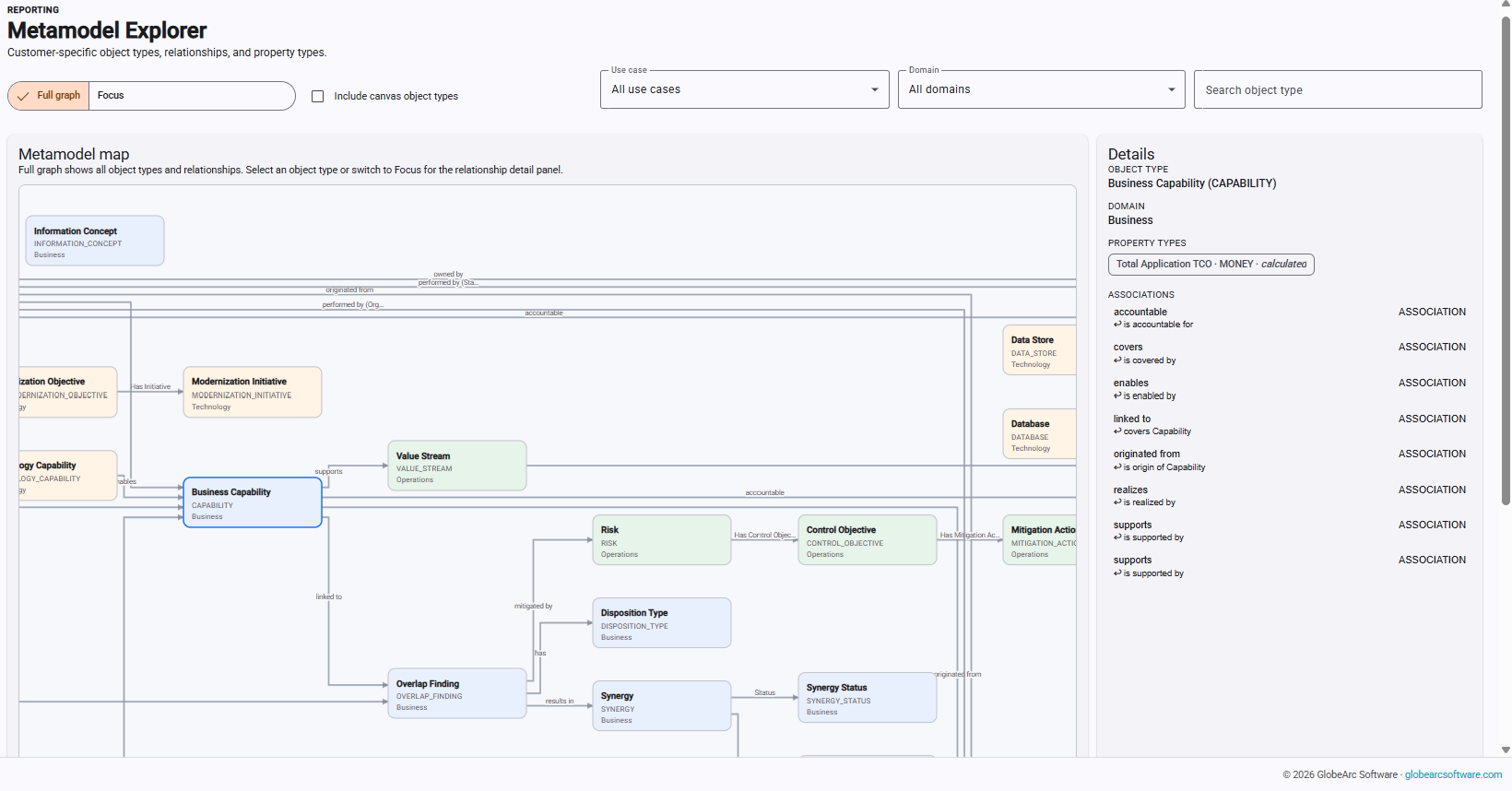
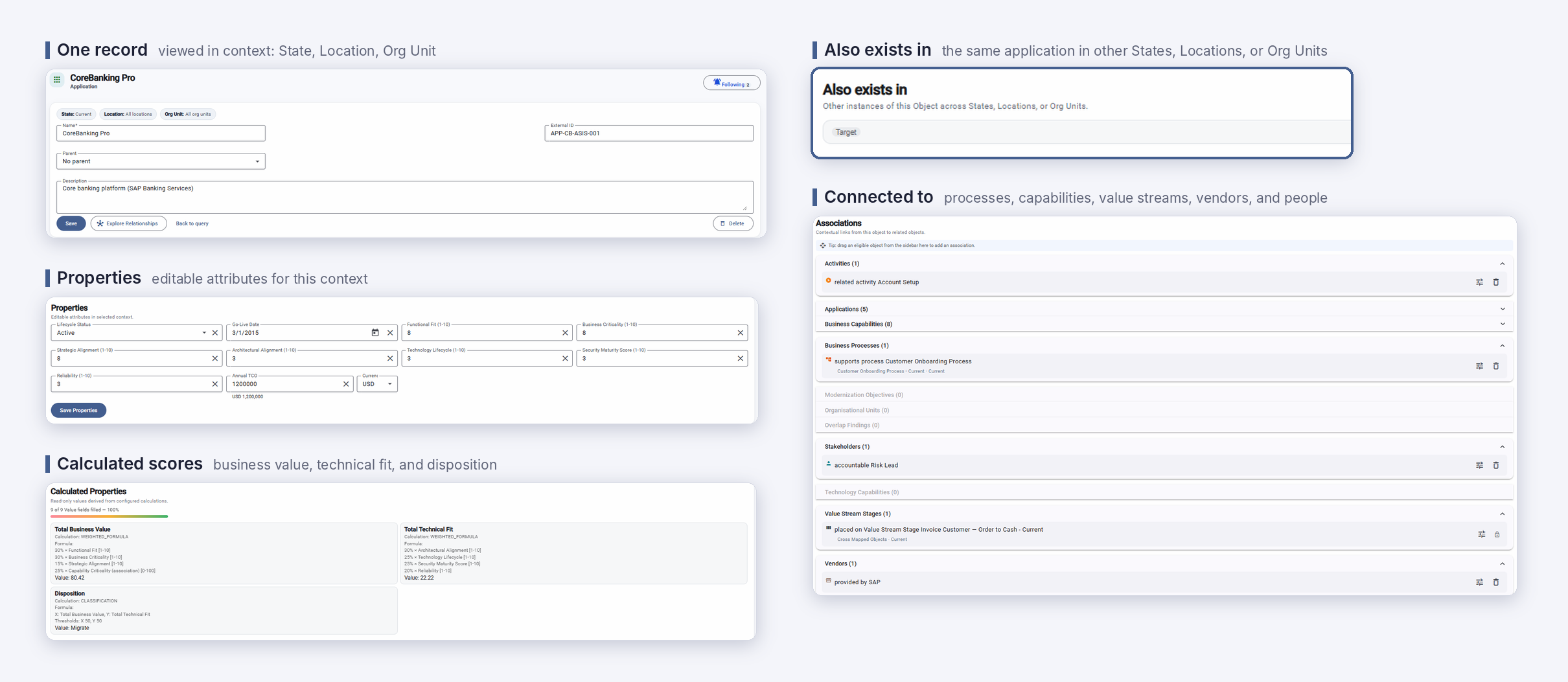
Bring architecture and process information into a common structure using configurable Objects, Associations, and Properties. GlobeArc can connect capabilities, applications, processes, value streams, organizational units, stakeholders, strategy, and other enterprise information without forcing every organization into the same metamodel.
Use Case Blueprints can also help teams identify what information a specific business question requires and where important gaps remain.

2
Understand and Configure
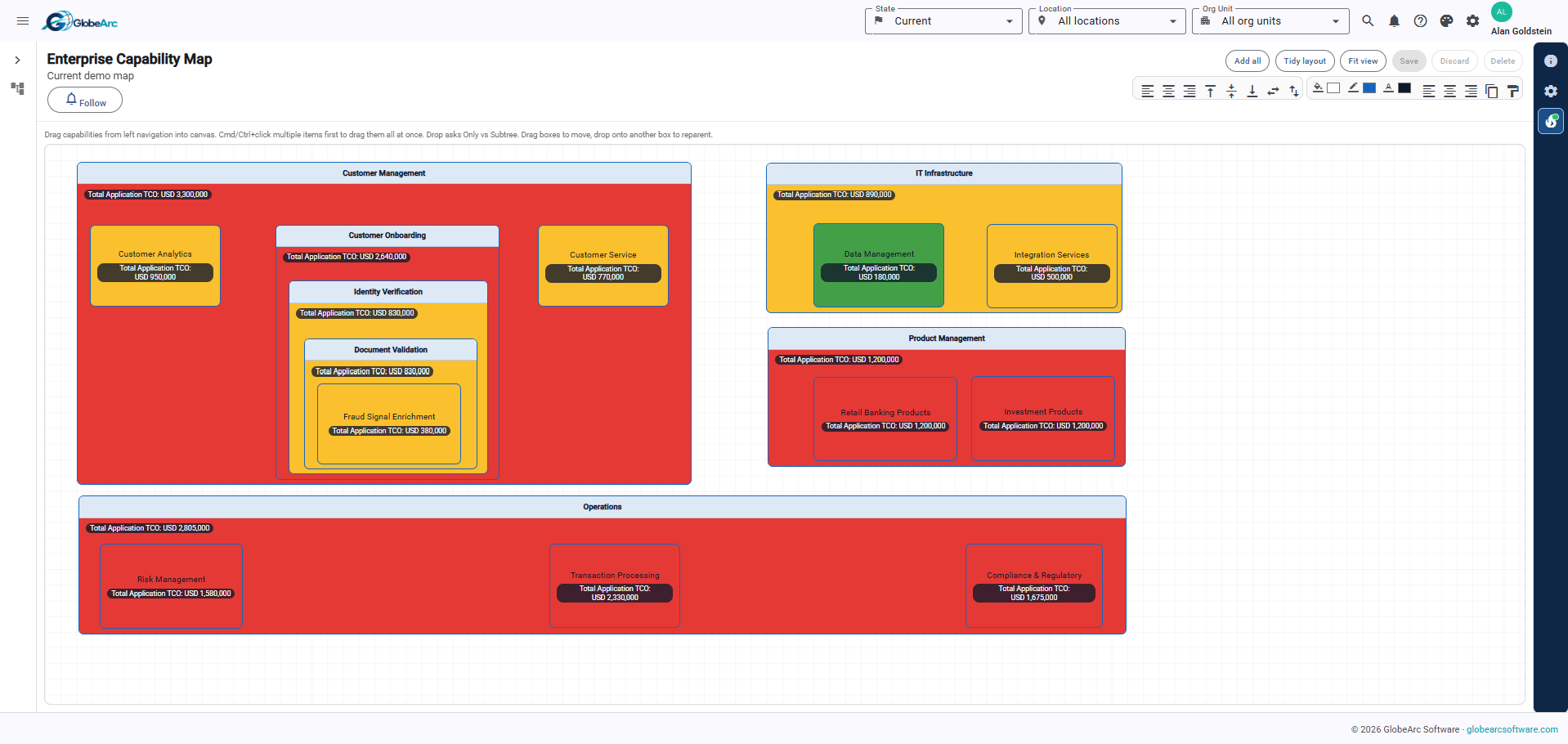
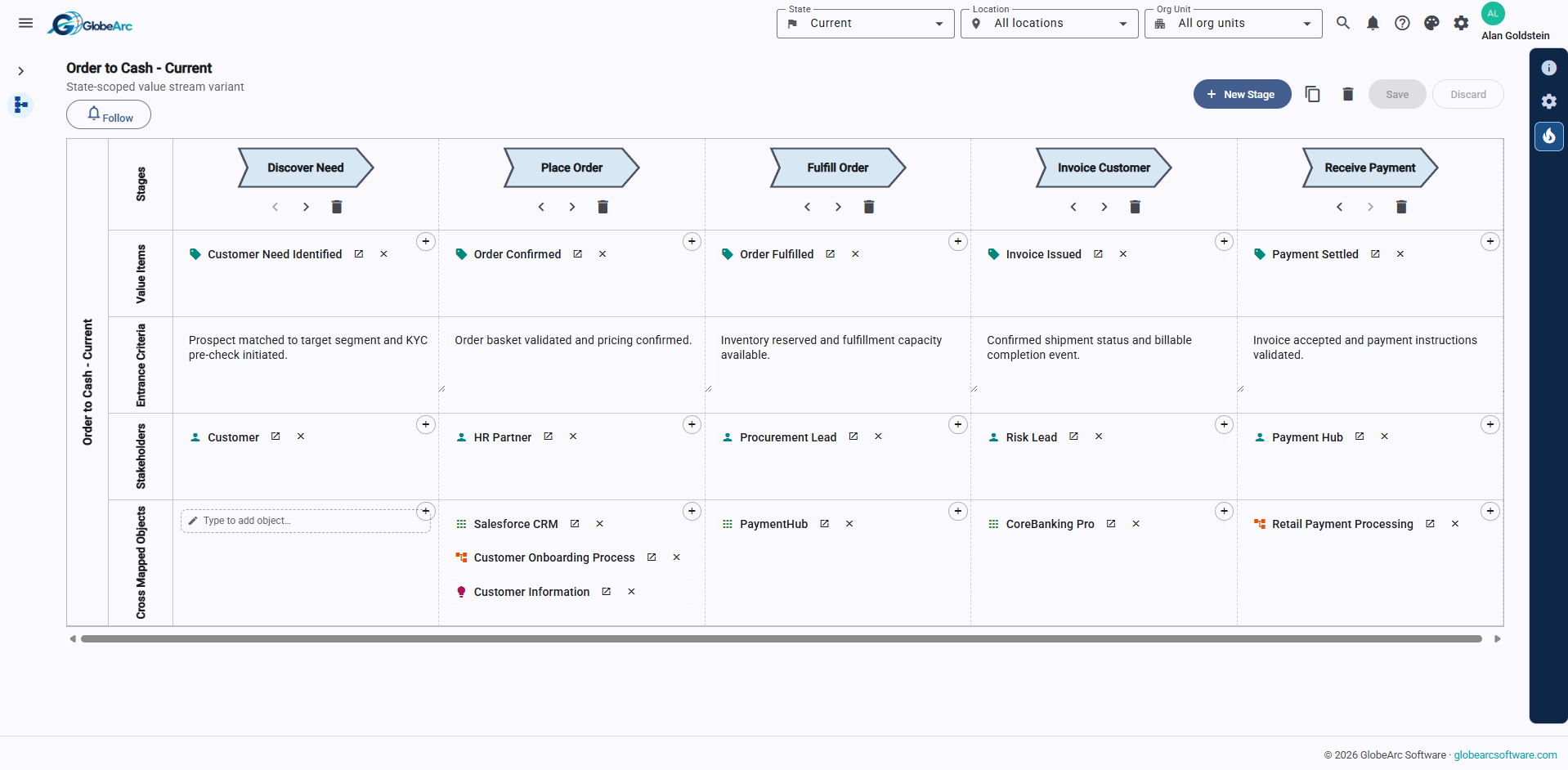
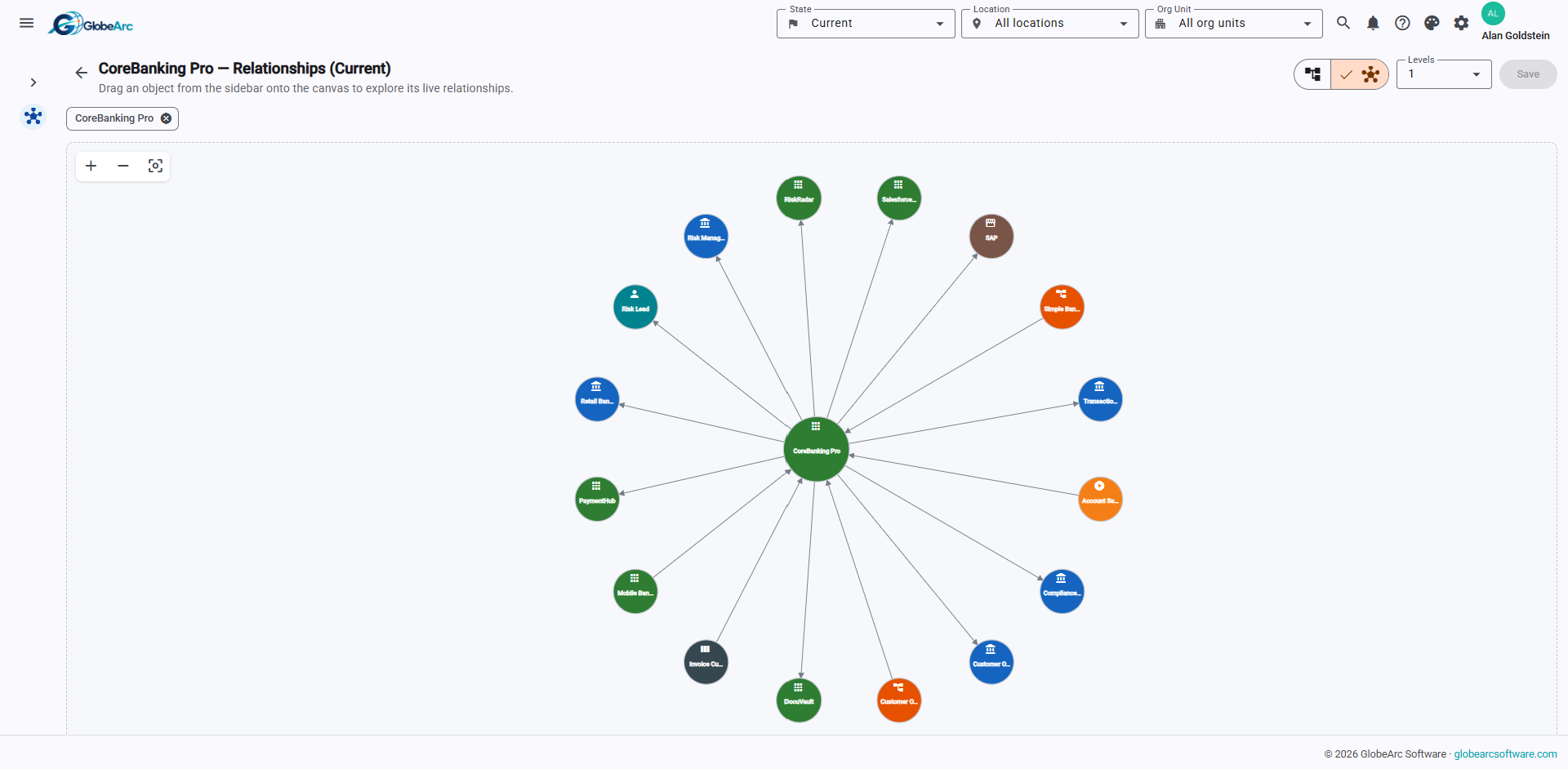
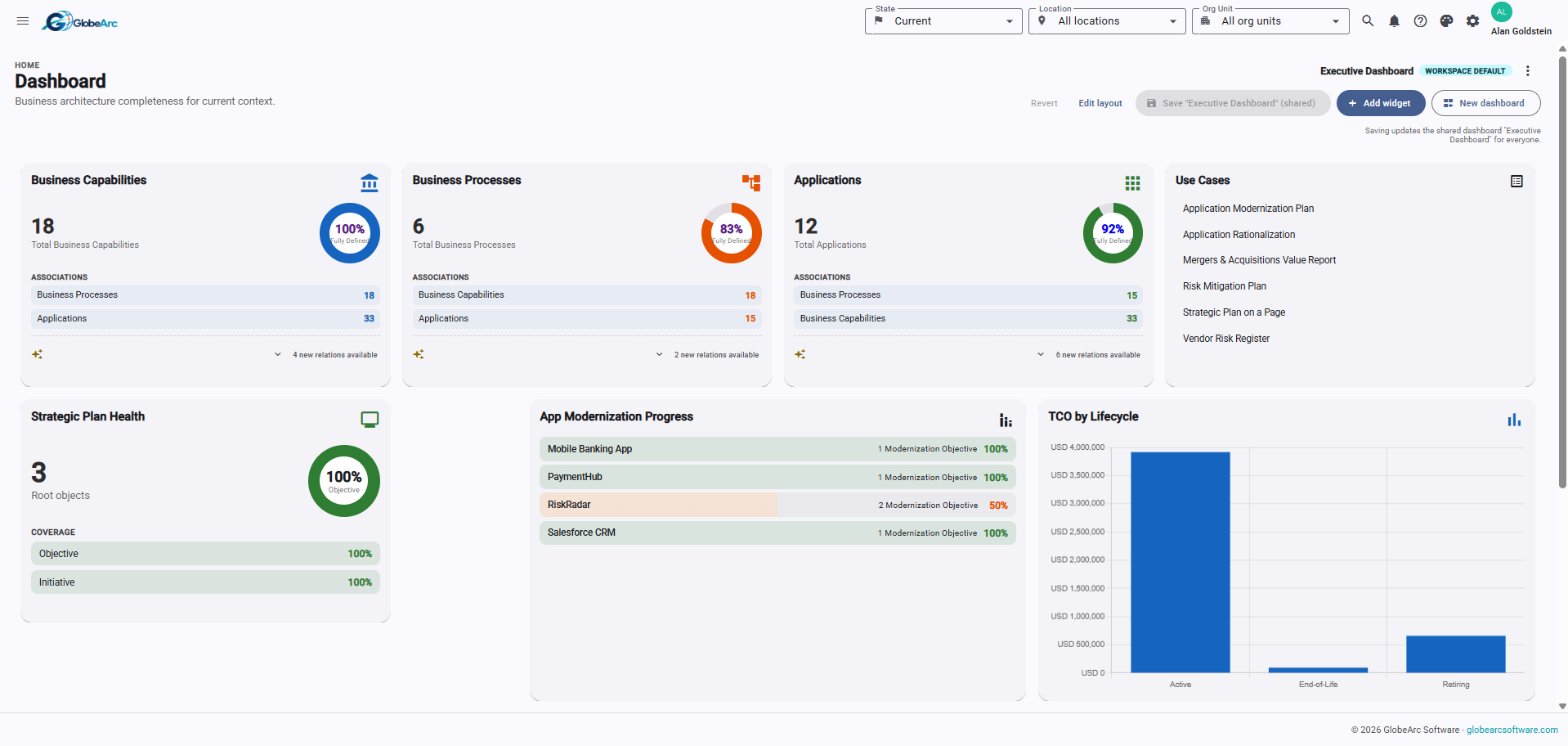
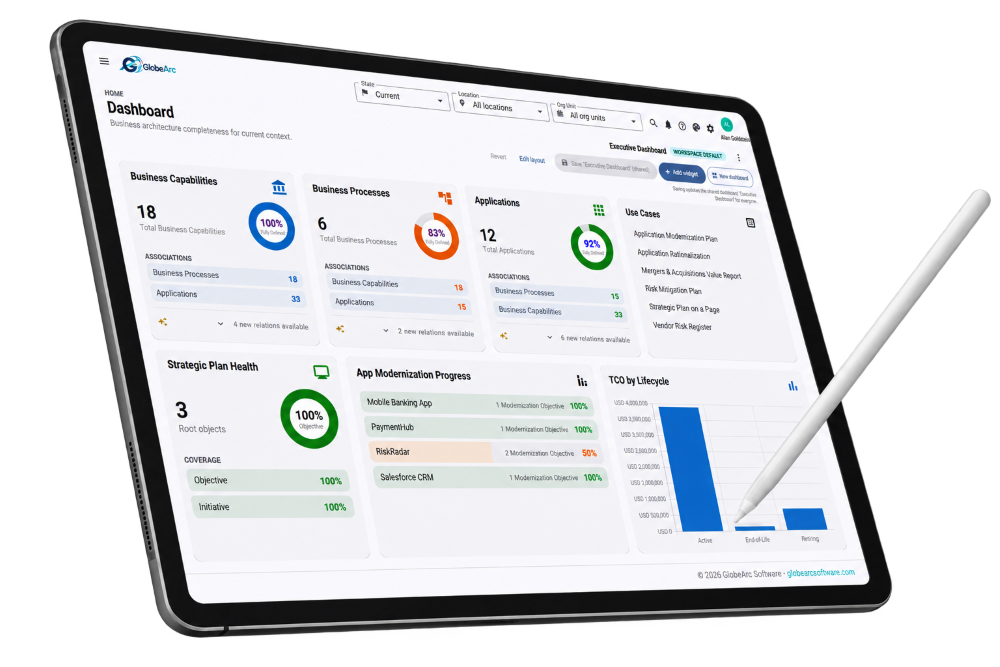
Explore the connected enterprise through the view that fits the question. Teams can work with BPMN process models, Business Capability Maps, Value Streams, Application Landscape Models, Relationship Explorer, queries, reports, dashboards, and heat maps while drawing from the same underlying information.
State, Location, and Org Unit add planning context, allowing teams to understand how architecture changes over time and how it varies across geographies and organizational structures.
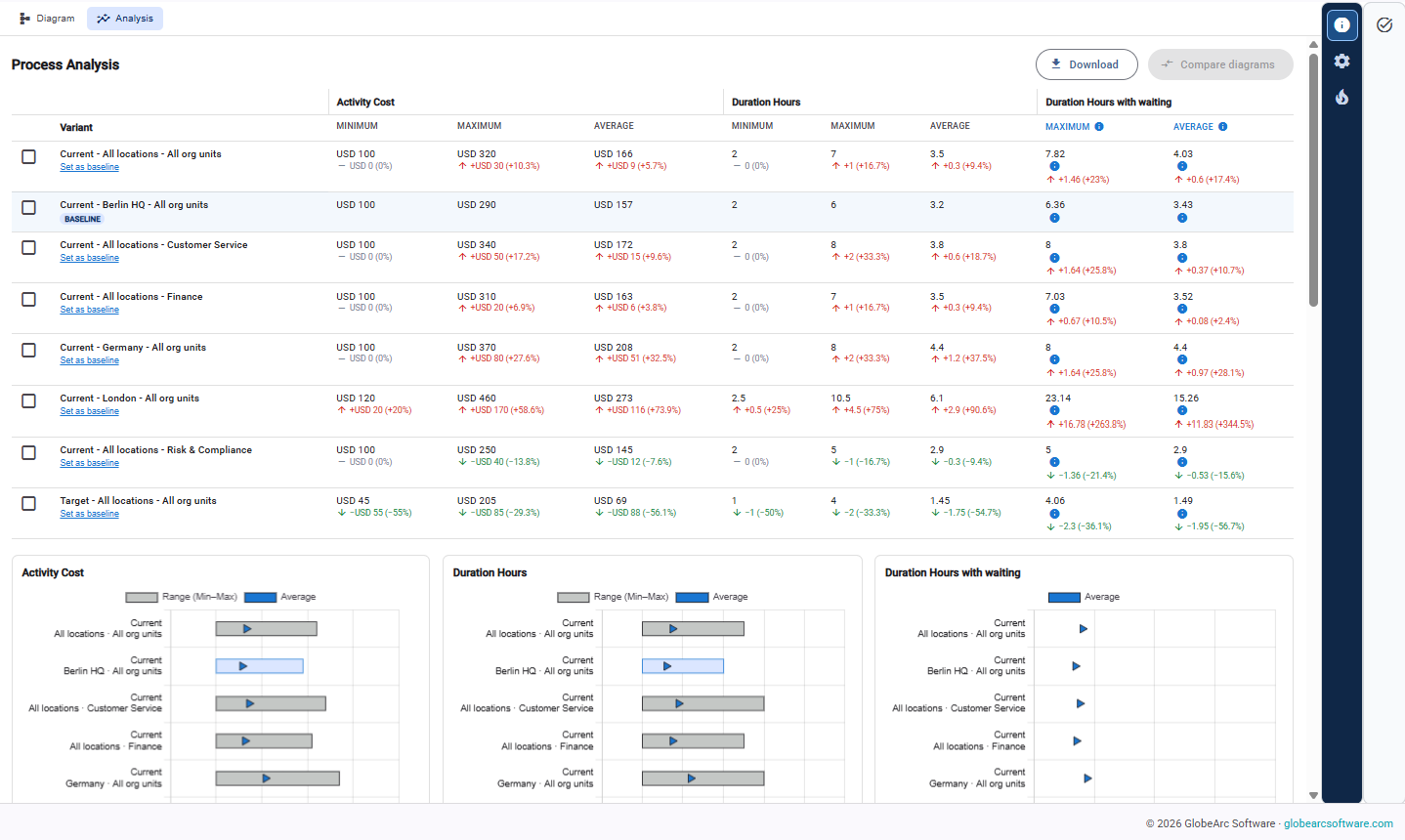
Teams can also simulate BPMN processes and compare Current and Target variants on cost, duration, waiting time, and team capacity.

3
Implement and Accelerate
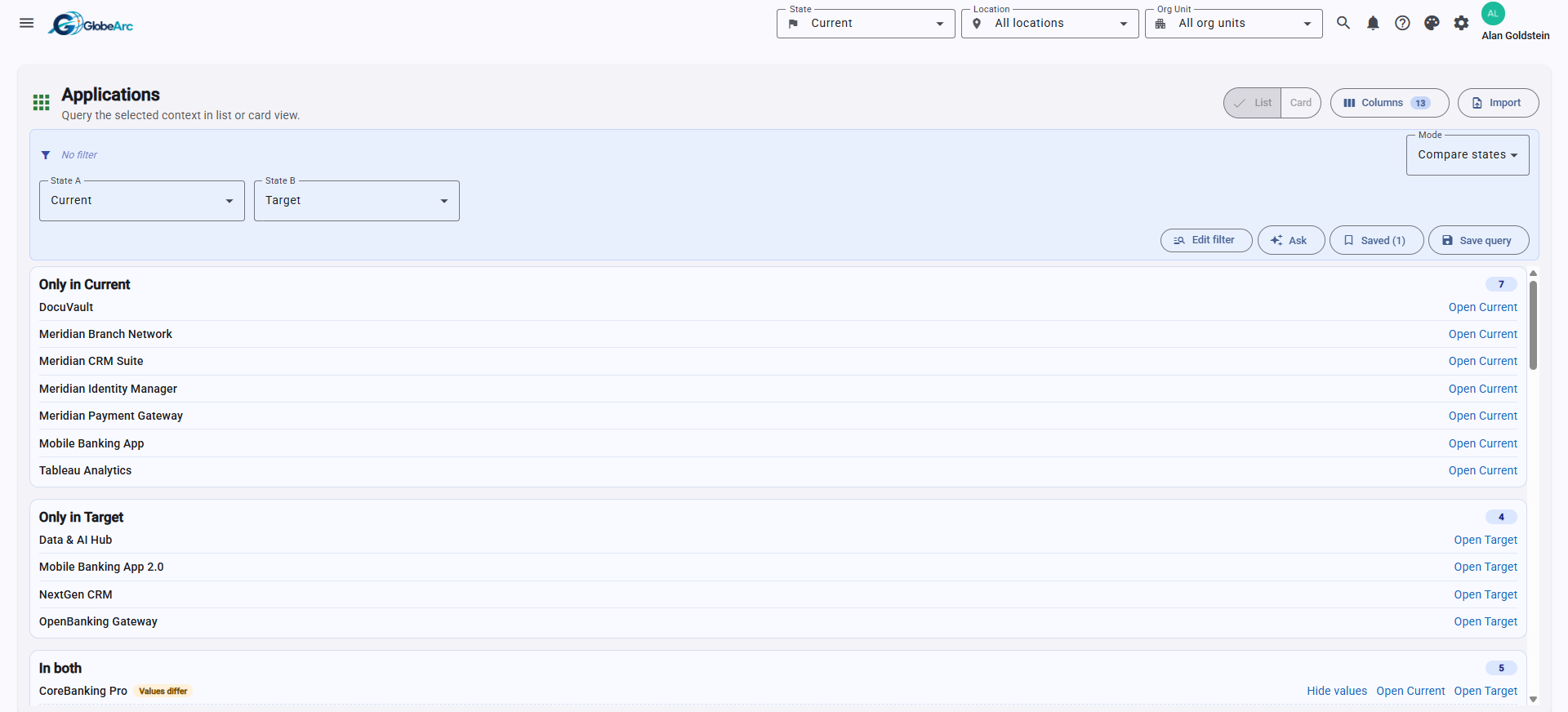
Use that connected understanding to support decisions about rationalization, modernization, process change, vendor exposure, M&A integration, strategic alignment, and Target-State planning.
Because architecture and process information share a common foundation, teams can trace the impact of change across both business operations and technology.

Connected Domains
How Does GlobeArc Connect Strategy, Process, Technology, Data, and People?
GlobeArc connects these domains through explicit relationships in the same repository, allowing teams to trace how a decision in one area affects the others.
- Strategy connects goals, objectives, initiatives, projects, and the capabilities they are intended to change.
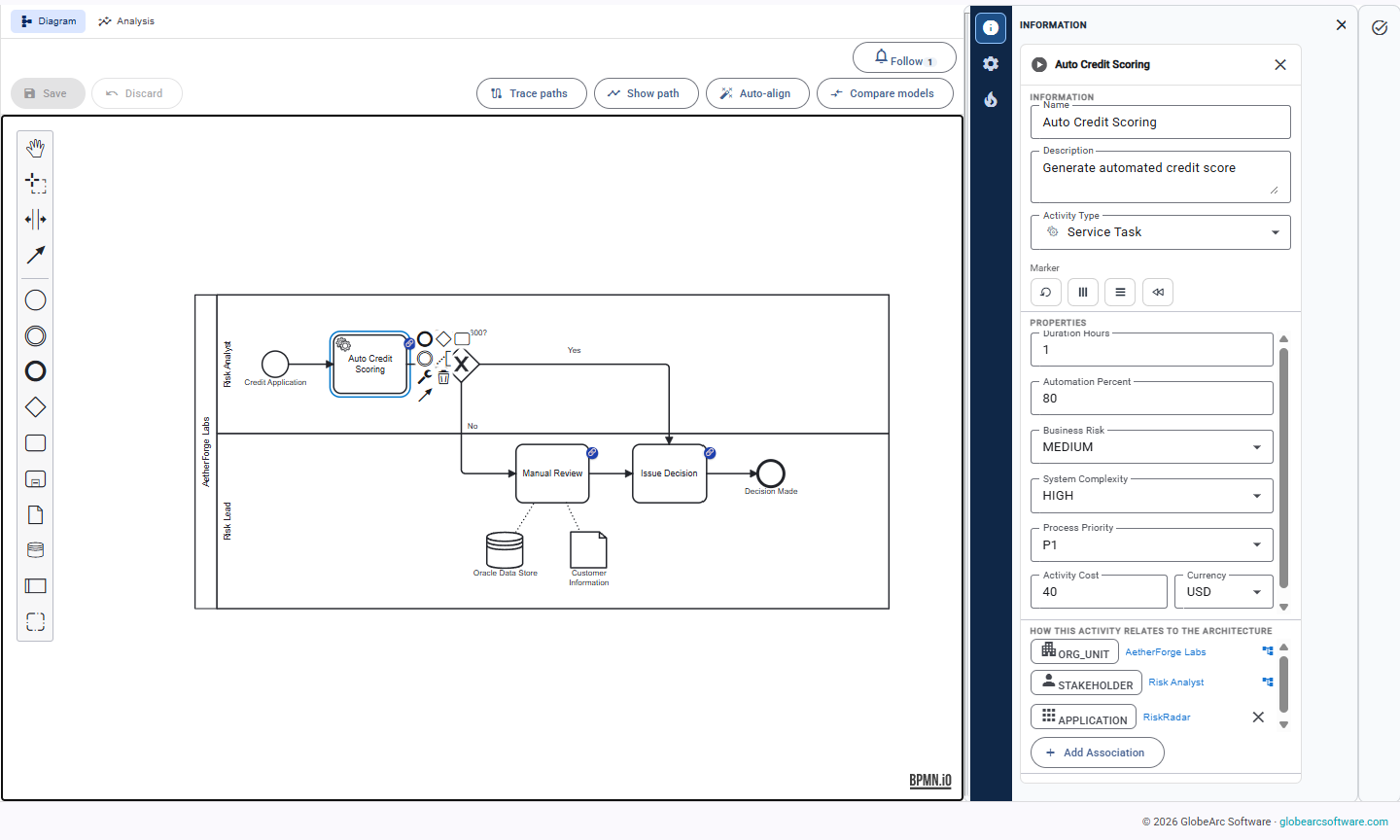
- Process connects BPMN activities and lanes to applications, stakeholders, organizational units, and other enterprise objects.
- Technology connects applications, integrations, lifecycle information, technical fit, and the capabilities they support.
- Data and information connect enterprise information concepts to the capabilities and processes that depend on them.
- People and organization connect stakeholders, organizational units, locations, ownership, and participation to the wider architecture.
The result is a connected model of the enterprise rather than separate business, process, and technology views that have to be reconciled manually.
Inside the Software
What Problems Does GlobeArc Solve?
GlobeArc helps solve problems that are difficult to address when architecture, process, and operational information are disconnected.

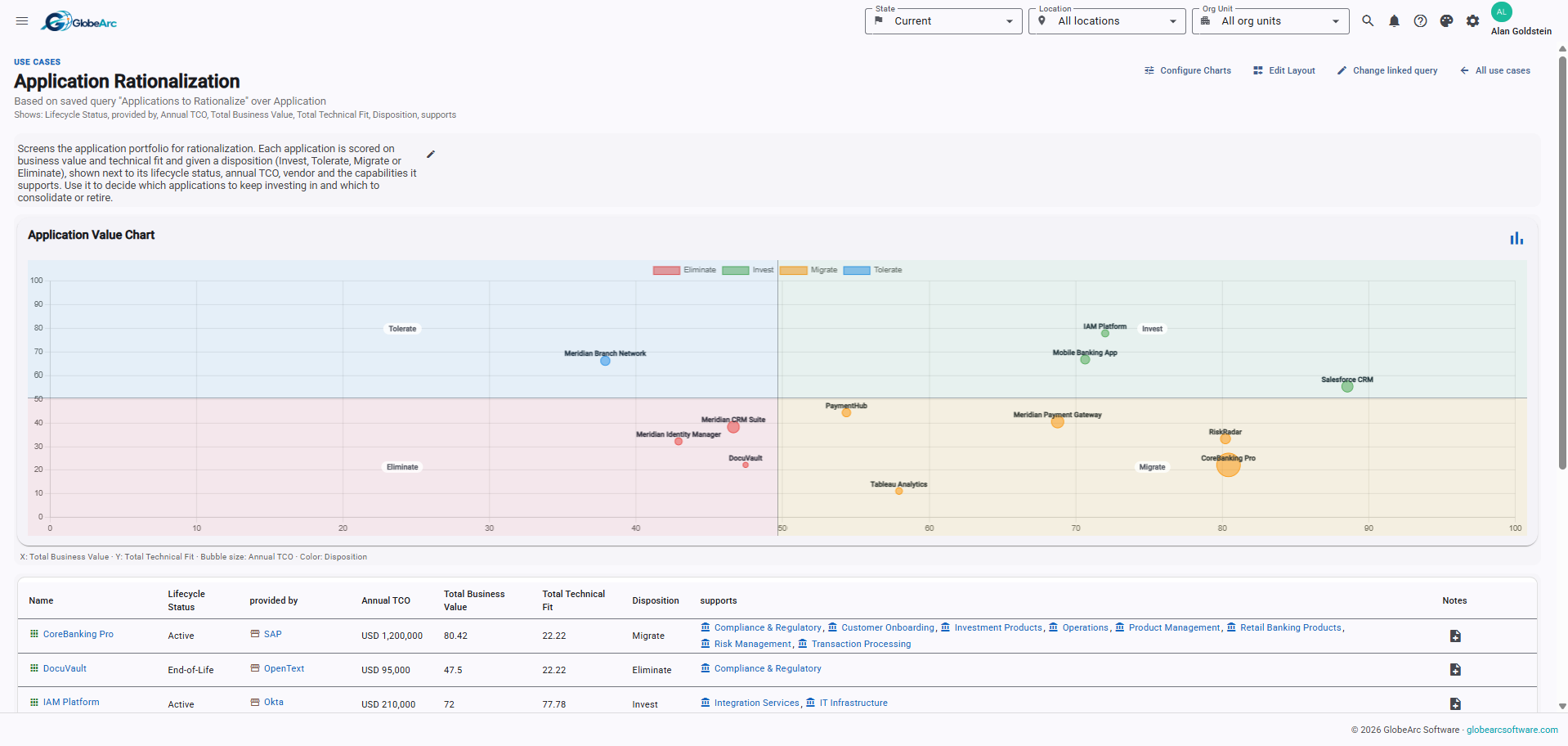
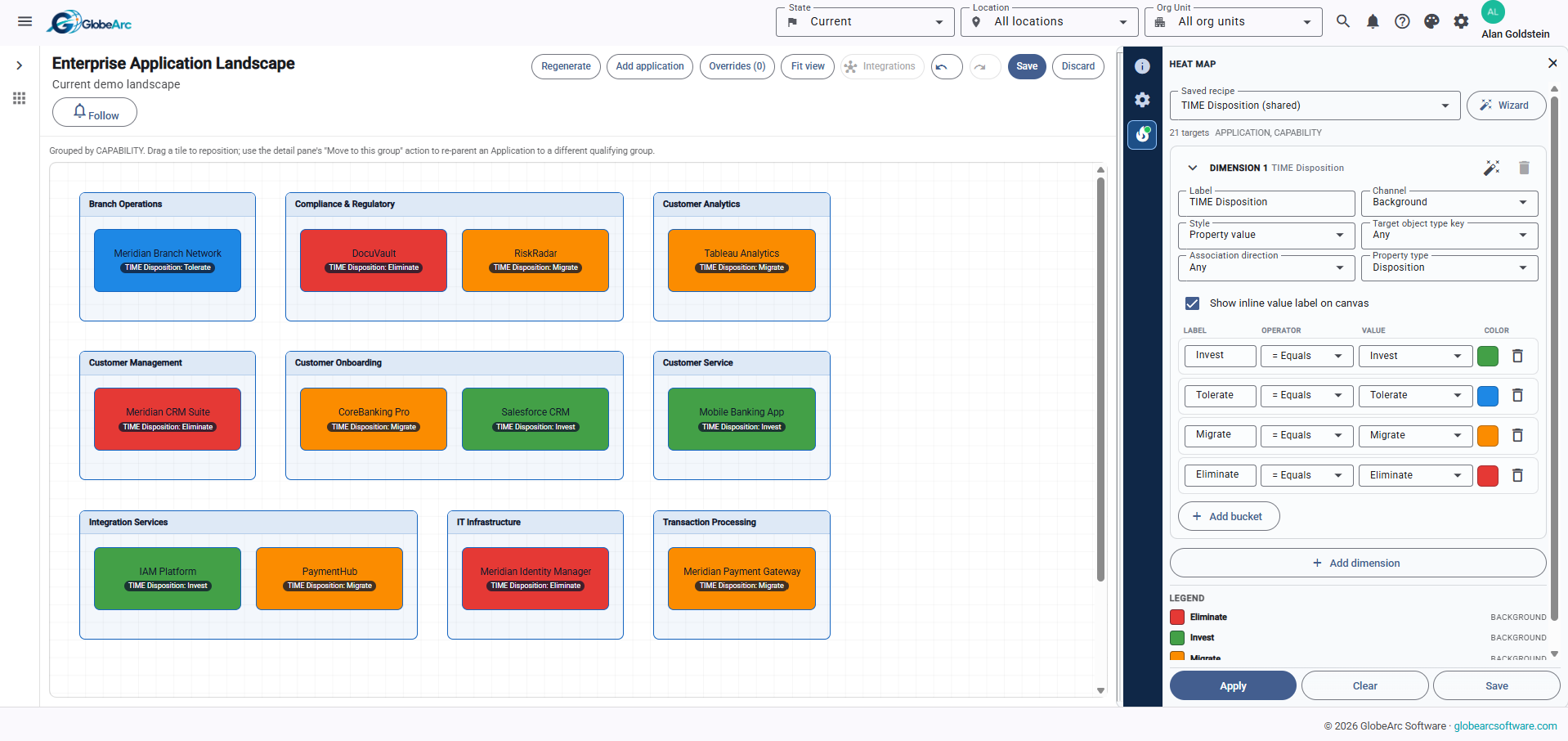
Application Rationalization
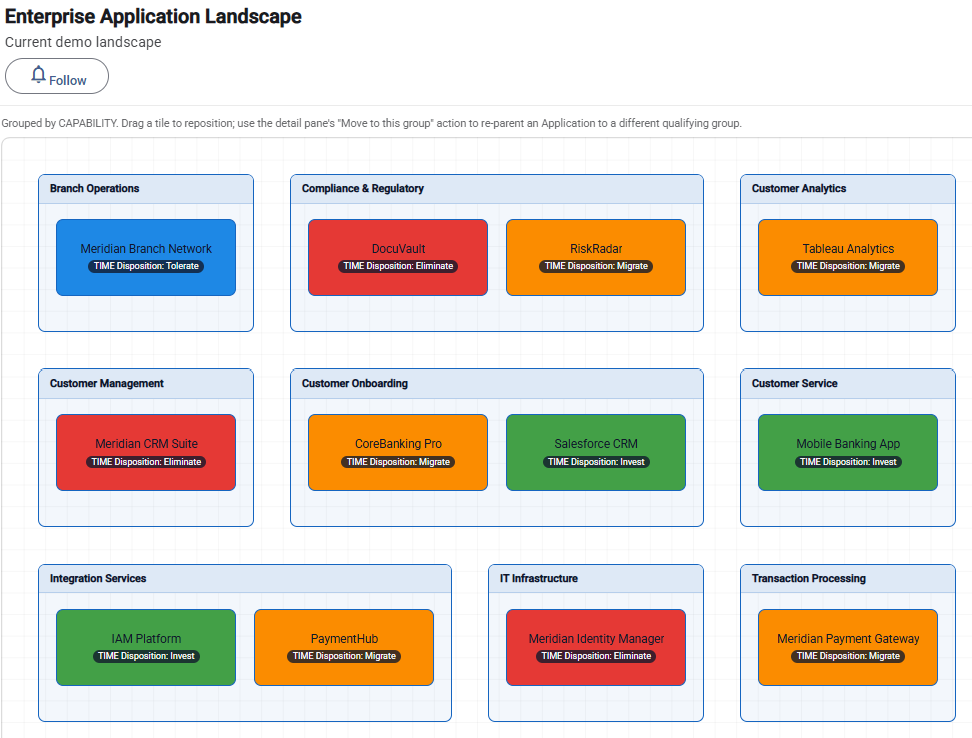
Decide whether each application should be tolerated, invested in, migrated, or eliminated, using value, technical fit, cost, completeness, and dependency context.

Strategy to Execution
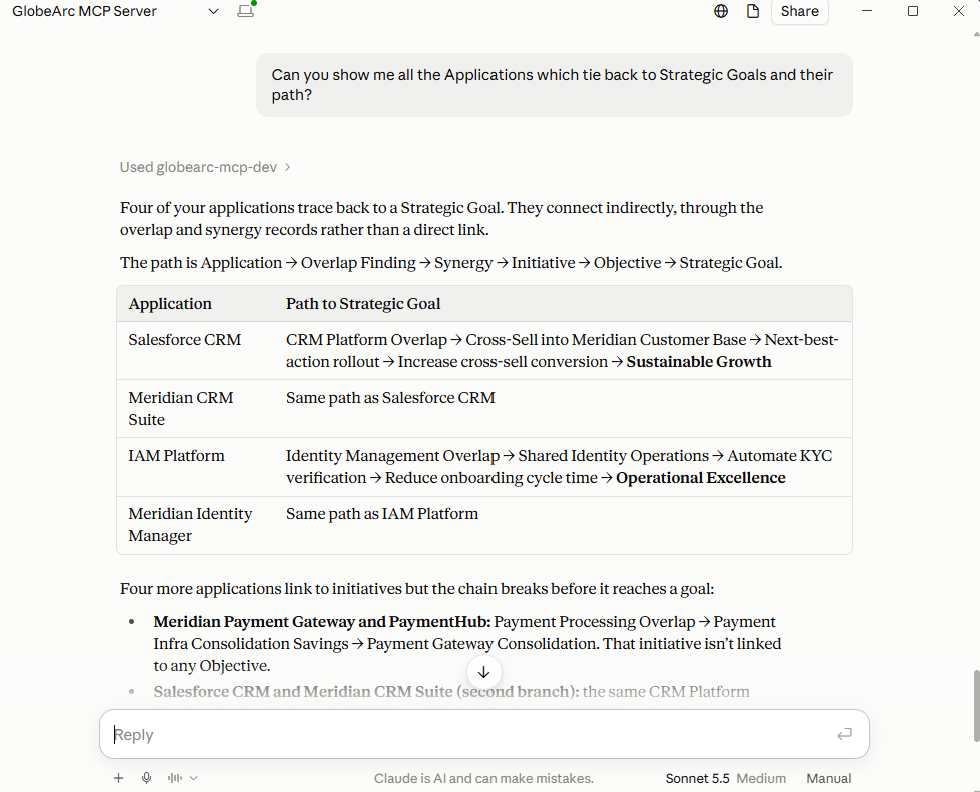
Connect strategic priorities to initiatives, projects, capabilities, and the wider enterprise so leaders can see whether funded work still supports strategic intent.

Process Standardization Across Locations and Organizational Units
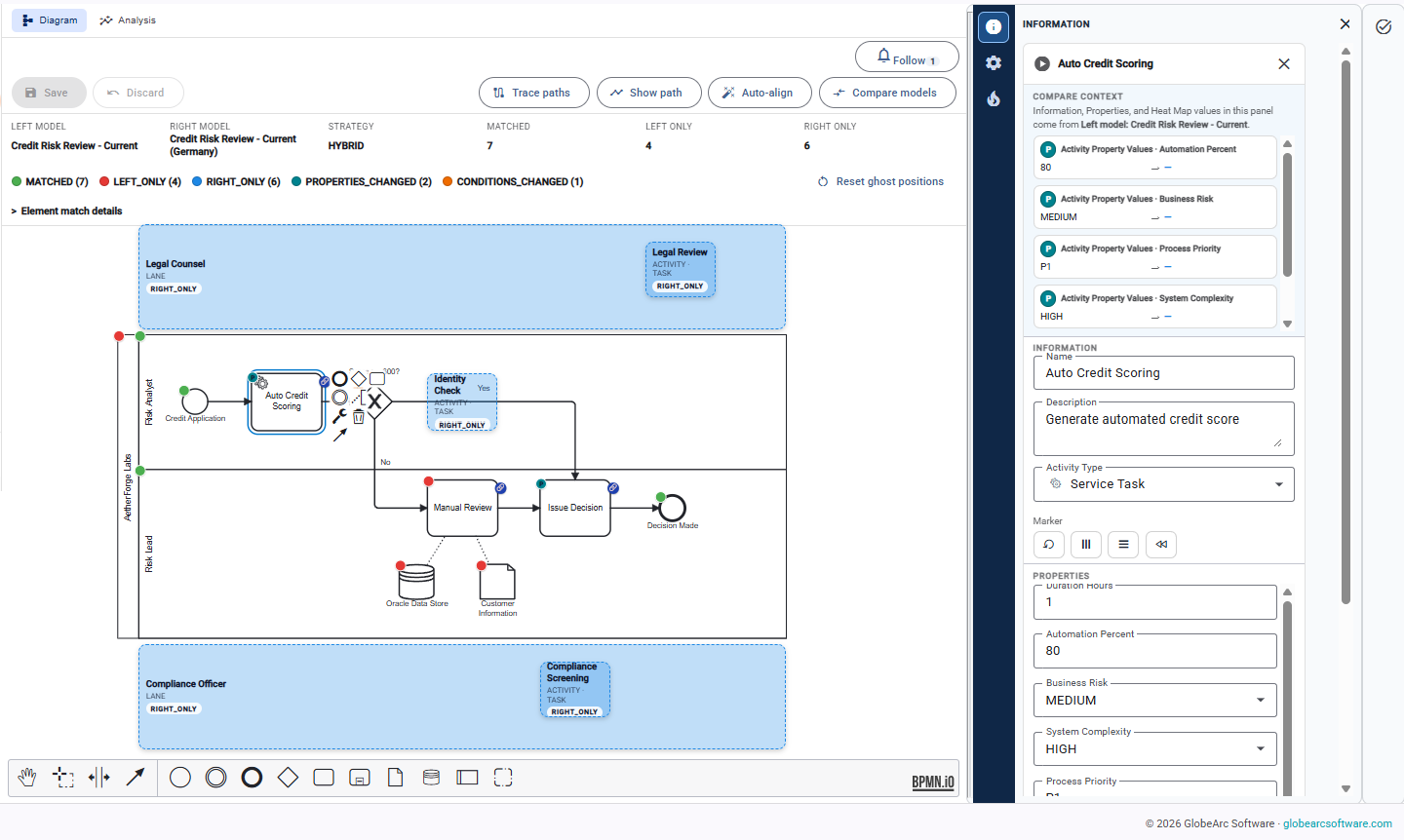
Compare process variants against a global standard, see what differs by location and organizational unit, and understand the people and systems behind each difference.

AI-Assisted Process Modeling
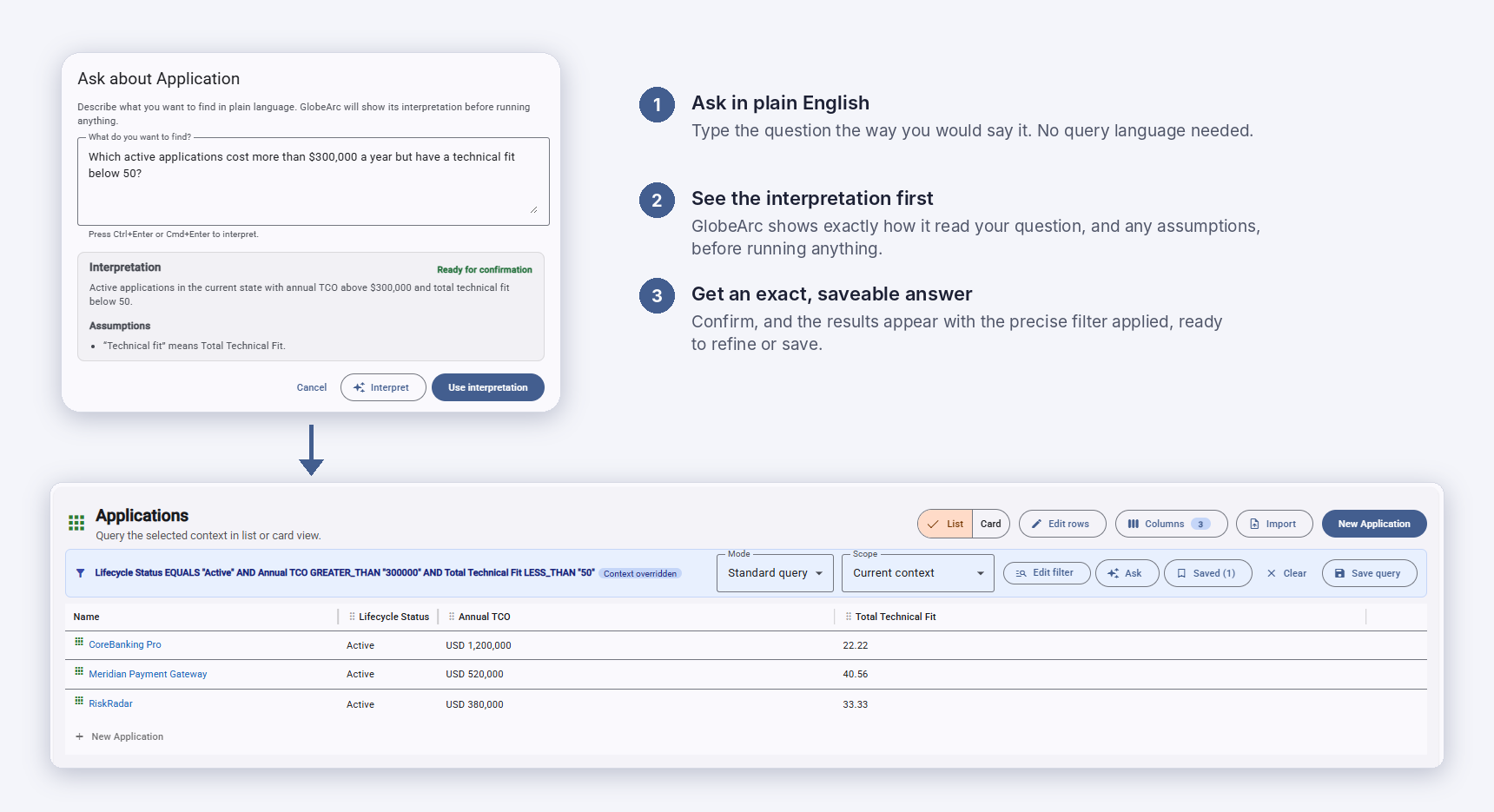
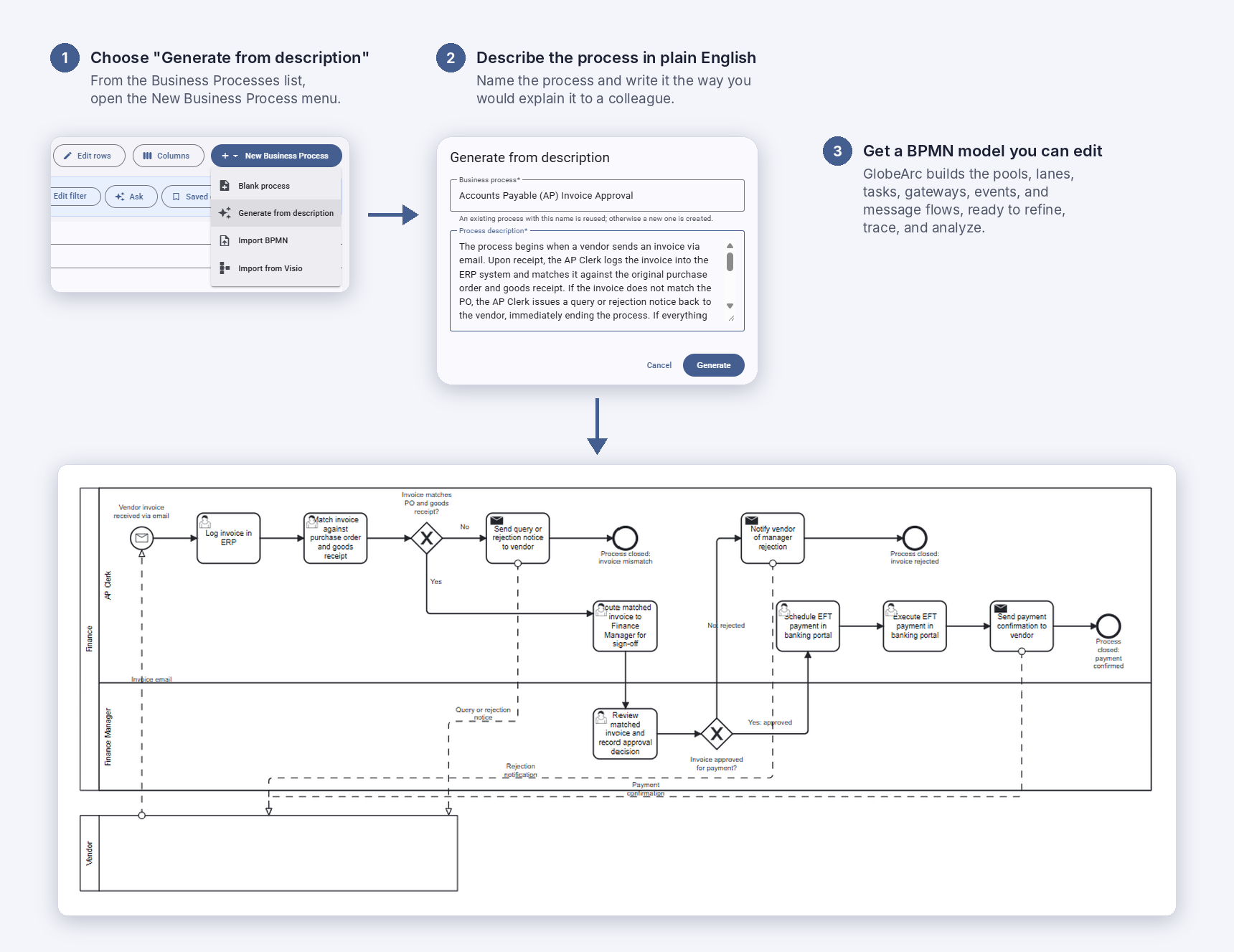
Turn plain-English descriptions and existing Visio diagrams into connected BPMN models, then ask questions about your processes in natural language.

Transformation and Target-State Planning
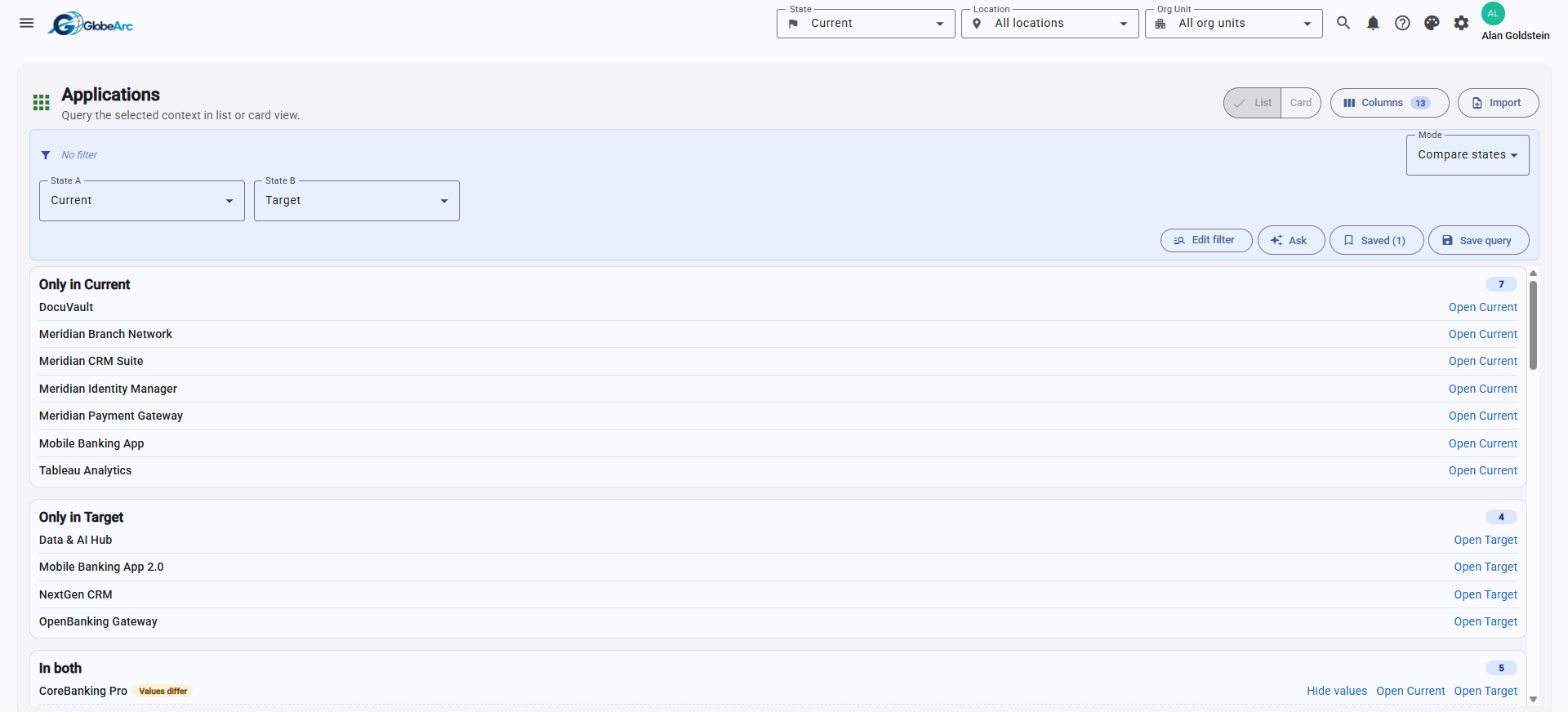
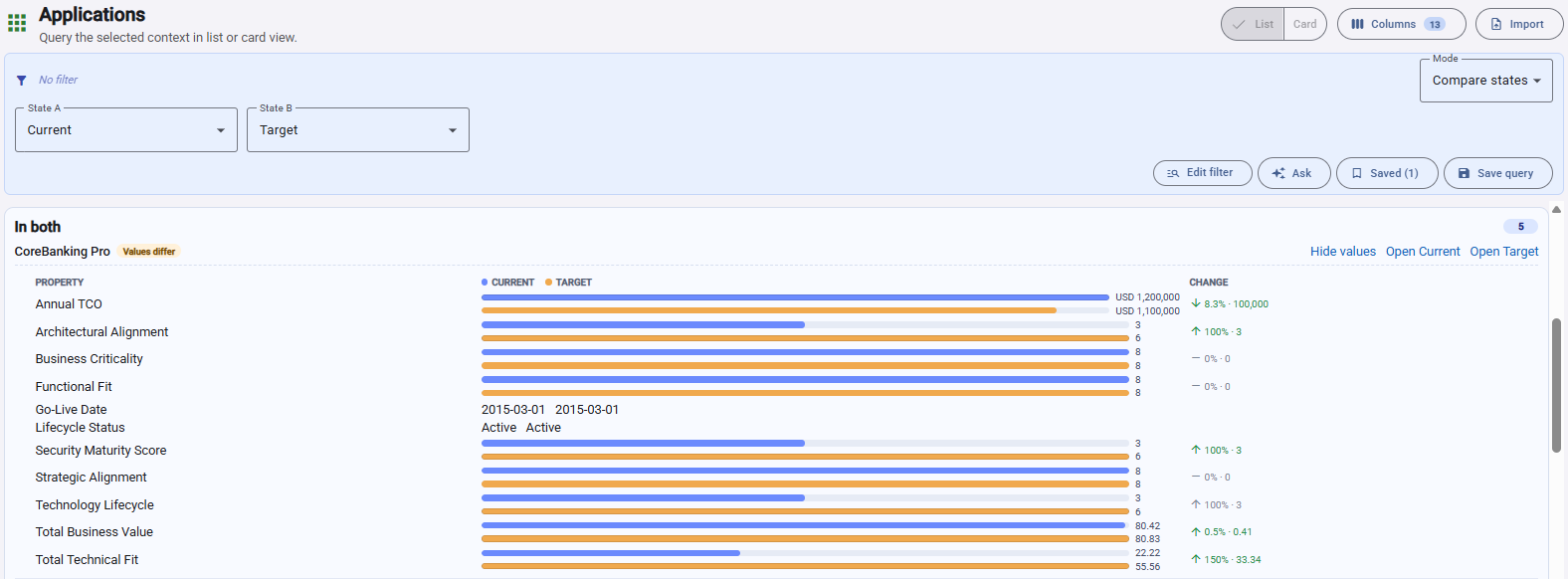
Compare Current, Interim, and Target architecture to understand what changes, what depends on those changes, and how the transformation varies across the organization.

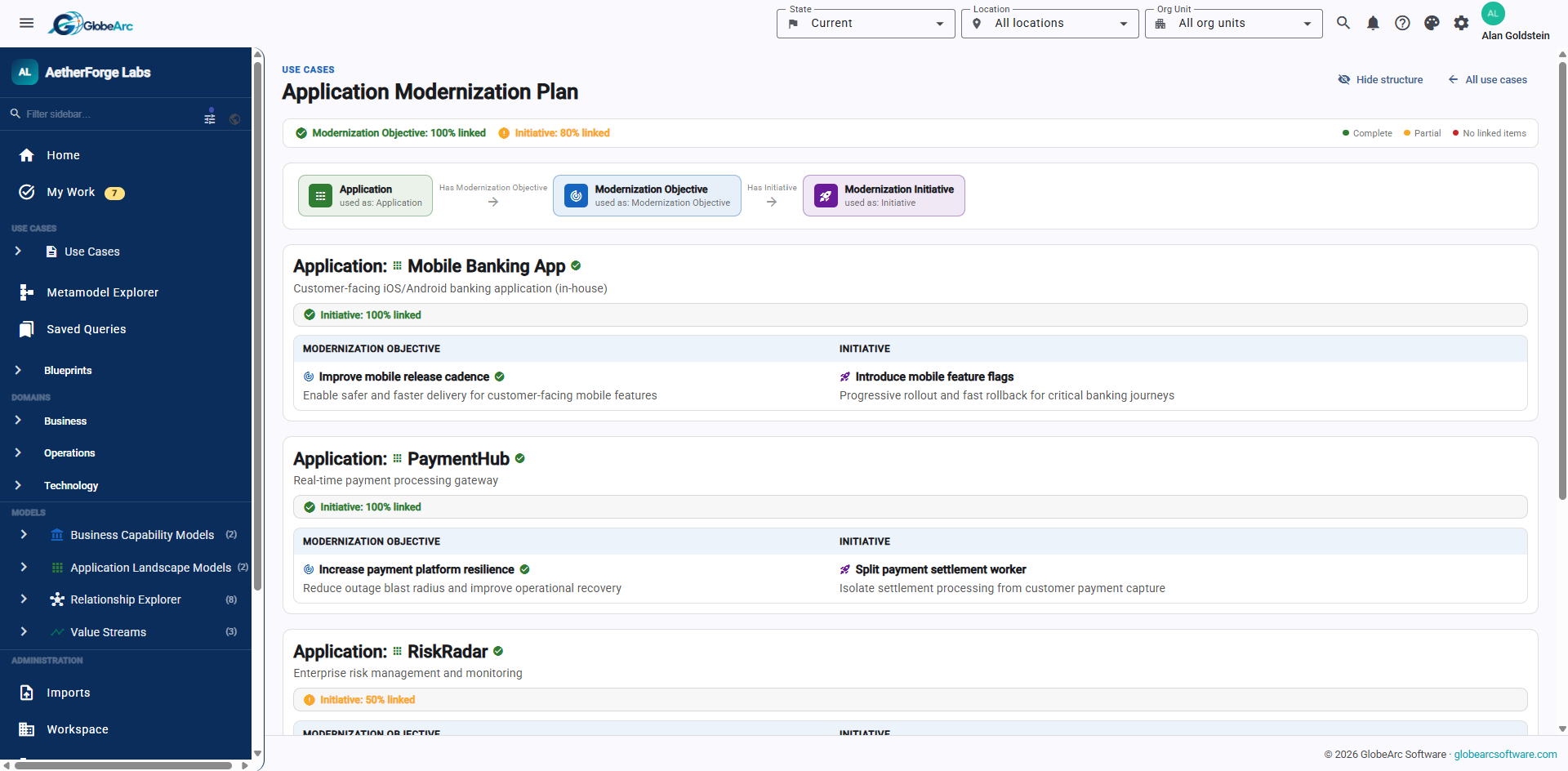
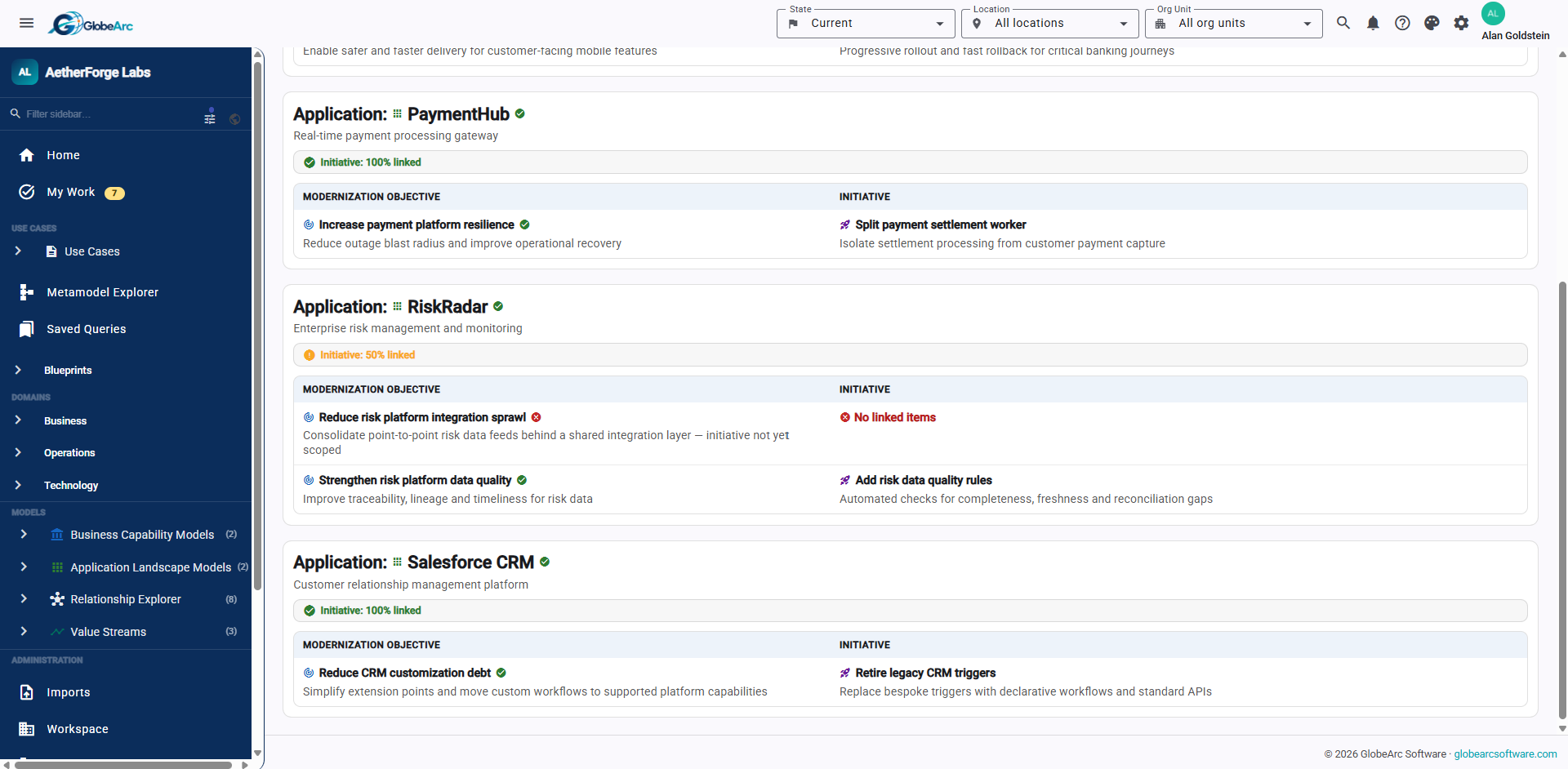
Application Modernization and Landscape Management
Understand the Current application estate, its integrations and business context, and how it needs to evolve toward the Target architecture.

Mergers and Acquisitions Integration
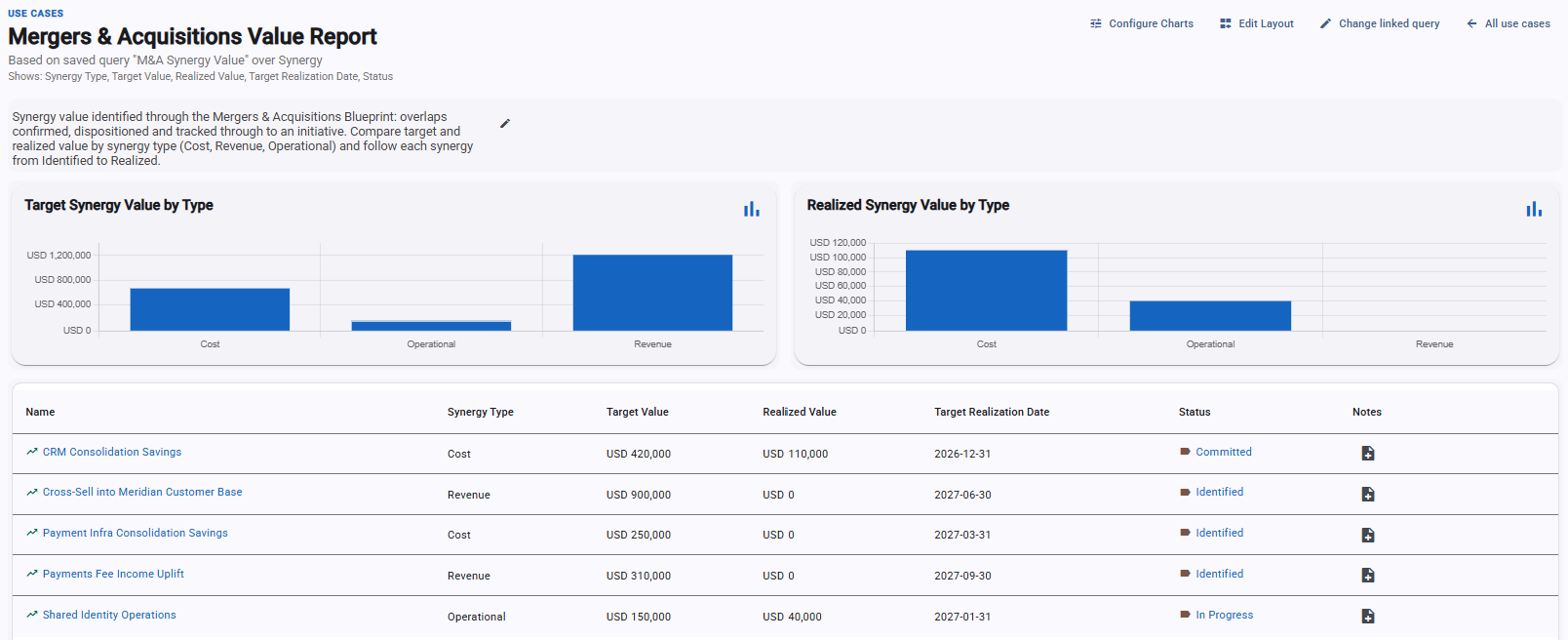
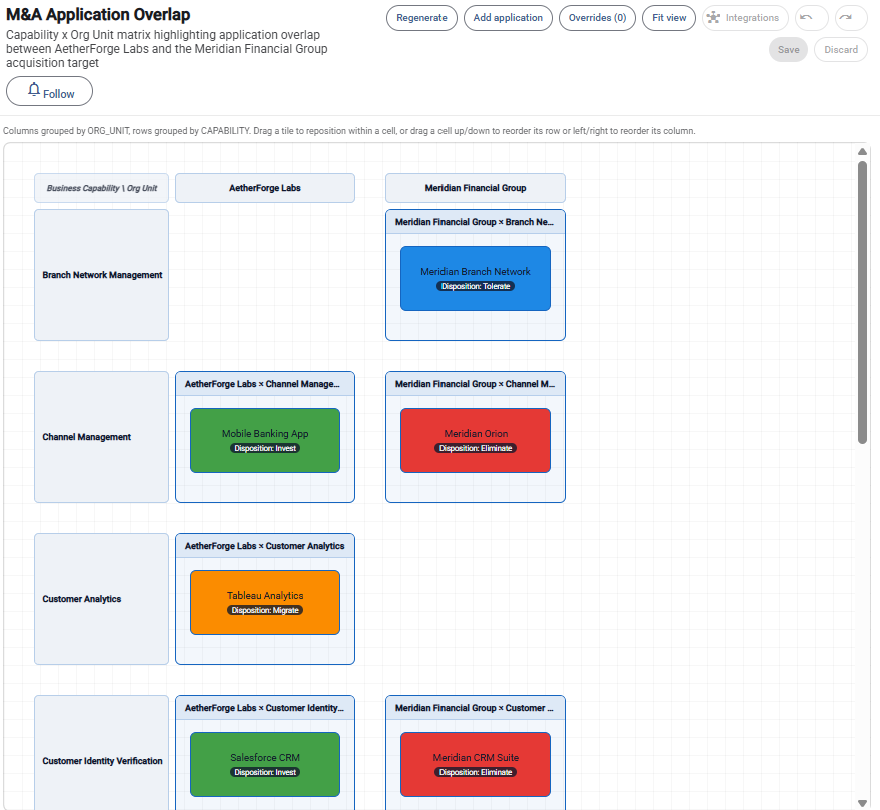
Compare two technology estates, identify overlap, track disposition decisions and synergy, and define the post-merger Target architecture.

Vendor Concentration and Risk
Trace vendor dependencies through applications, capabilities, processes, contracts, and organizational context to understand where concentration creates business exposure.

Why Does Enterprise Complexity Make Better Decisions Harder?
Important business and technology decisions usually cross several domains, but the information needed to make them is often scattered across different systems, diagrams, spreadsheets, and teams. That fragmentation creates decision blindness because no single view explains how the affected parts of the organization connect.
Typical questions include:
- Which applications should we retire?
- What business capabilities depend on them?
- Which processes would be affected?
- Where are we too dependent on one vendor?
- Are transformation investments connected to strategy?
- What changes between our Current and Target architecture?
- Where do our processes differ across locations and organizational units?
GlobeArc connects the information behind those questions so teams can assess a decision in context instead of reconstructing the enterprise each time something changes.
From Complexity to Clarity
What Does One Connected Platform Change?
Enterprise Architecture and Business Process Management can work from the same underlying enterprise information instead of maintaining separate representations of the organization. GlobeArc uses one configurable repository to support architecture models, BPMN processes, reports, queries, heat maps, and planning views.
That shared foundation means different teams can work from the perspective that fits their job while remaining connected to the same enterprise context. A capability can be related to applications and value streams, a process can connect to organizational units and systems, and an initiative can connect strategic intent to the capabilities it is intended to change.
Why Is GlobeArc Different From Traditional EA and BPM Tools?
GlobeArc was designed around a shared foundation for Enterprise Architecture and Business Process Management rather than treating them as separate disciplines that happen to sit inside the same product. That structural choice affects how teams model the enterprise, analyze it, plan change, and reuse information across different views.
Several design decisions support that approach:
- One canonical repository supports architecture, process, reporting, analytics, and planning views.
- Native BPMN models connect to the same enterprise objects used across the wider architecture.
- Current, Interim, and Target states are built into the planning context rather than maintained as unrelated models.
- State, Location, and Org Unit allow architecture to vary across time, geography, and organizational structure.
- One heat-map engine works across multiple visual model types.
- Use Case Blueprints guide setup around real business questions.
- AI-assisted queries use validated query structures rather than unrestricted database access.
- The platform was designed as modern multi-tenant SaaS from the beginning.
GlobeArc's advantage comes from connecting the structure of the enterprise with the processes that make it operate. That gives architecture, process, and transformation teams a shared basis for understanding what exists, how it works, and what needs to change.

Experience GlobeArc in Action
Software Screenshots
Click on any image for an expanded view
We’re here to help you bring clarity to complexity.