Business and Process Analysts
Business Analysis Software
Business Analysis Software for Understanding Change and Dependencies
Business analysts need to understand how the organization actually works before they can recommend how it should change.
GlobeArc gives you connected information about processes, applications, data, people, organizational structures, capabilities, and other enterprise relationships so you can investigate the business without piecing together answers from multiple disconnected sources.
Instead of spending analysis time chasing information across diagrams, spreadsheets, systems, and subject-matter experts, you can search, query, and explore relationships from one connected foundation.
That makes it easier to understand what supports a process, what depends on a system, and what could be affected before a change moves forward.


What Is Business Analysis Software?
Business analysis software helps analysts investigate how an organization operates, understand relationships and dependencies, and evaluate the potential effects of change. GlobeArc supports that work by connecting enterprise information that is often maintained separately across process, technology, organizational, and business models.
For business analysts, this provides a more complete basis for requirements work, impact analysis, transformation initiatives, and other decisions that depend on understanding how different parts of the business fit together.
How Can Business Analysts Understand How the Business Actually Works?
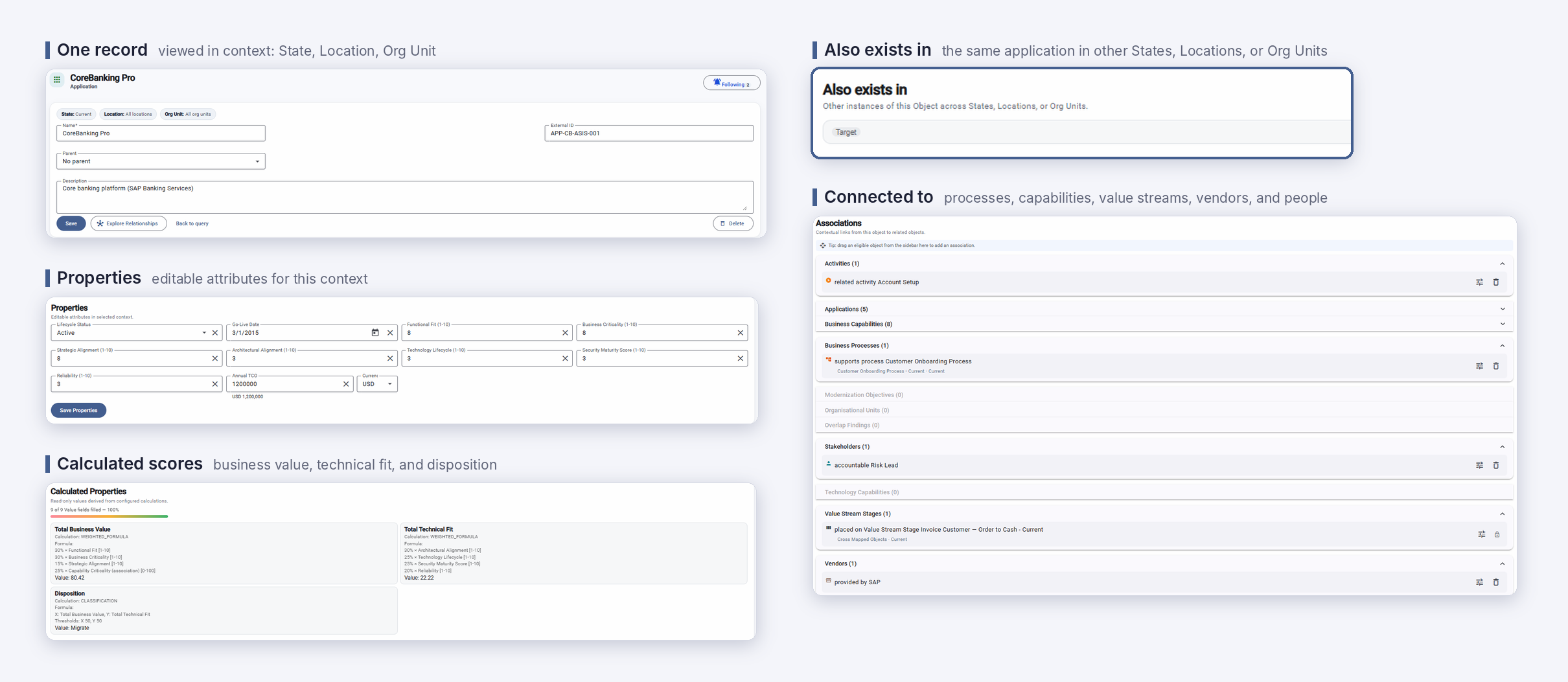
Connected information gives analysts a clearer picture of how processes, systems, people, and data work together across the organization. GlobeArc maintains those relationships in a shared repository rather than requiring analysts to reconstruct them for each project.
You can investigate questions such as:
- Which applications support a business process
- Which teams or stakeholders perform particular work
- What data or information is involved
- Which capabilities depend on specific systems
- Where the same process or application appears across different areas
- How business and technology relationships change by organizational context
How Do Business Analysts Find Enterprise Information Faster?
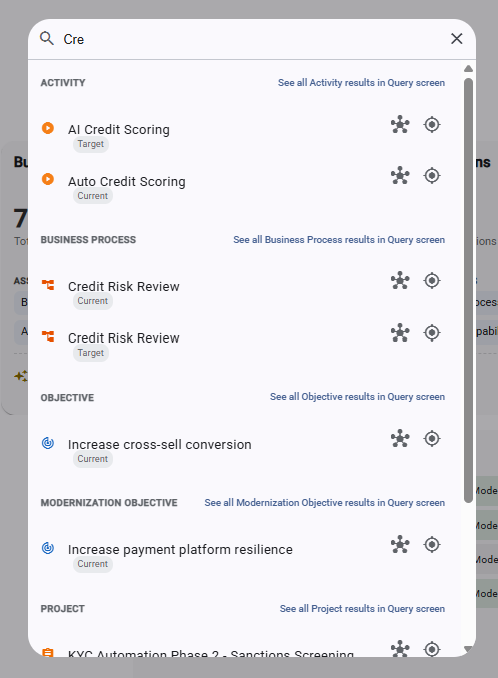
Search and connected navigation reduce the need to know in advance which system, diagram, or document contains the answer. GlobeArc provides multiple ways to locate enterprise information and move directly into the relationships surrounding it.
Business analysts can use:
- Global search to find relevant enterprise objects
- Related-object views to explore connected information
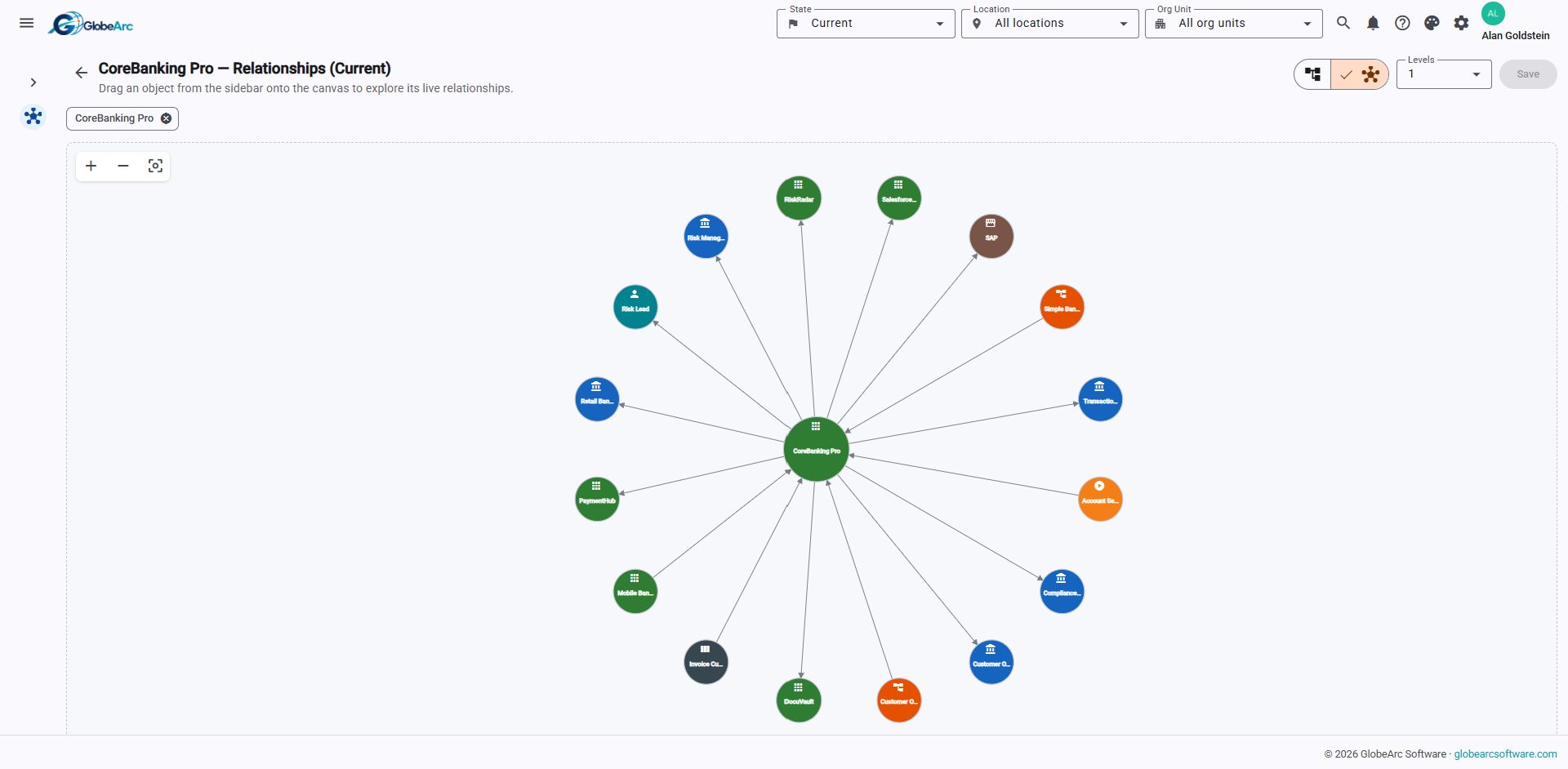
- Relationship Explorer to investigate dependencies
- Saved queries for recurring analysis
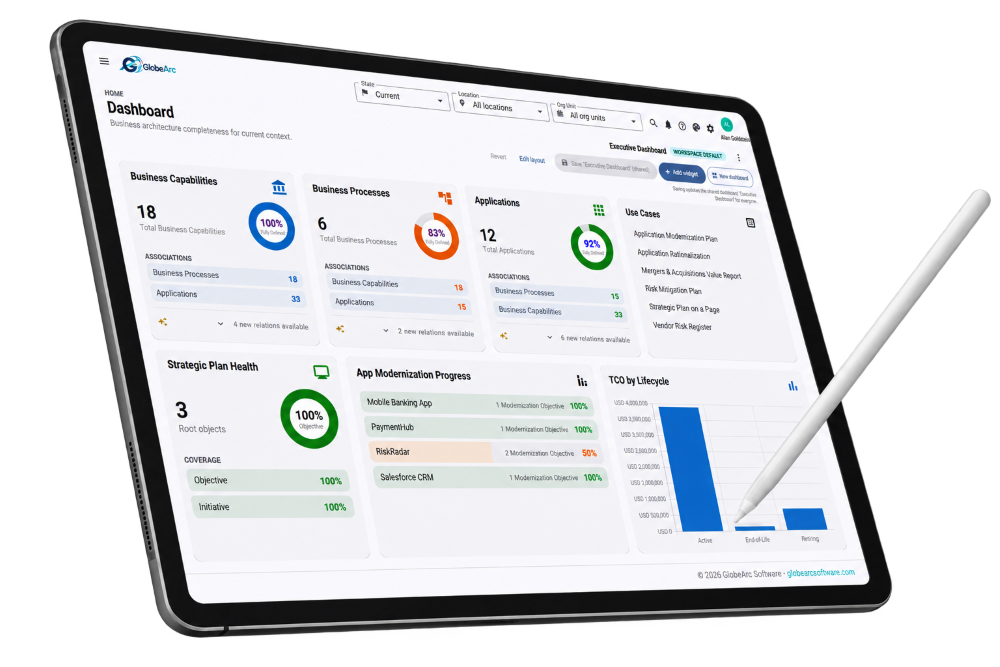
- Reports and dashboards for broader views
- Contextual views across State, Location, and Org Unit
What Tools Help Business Analysts Understand Dependencies?
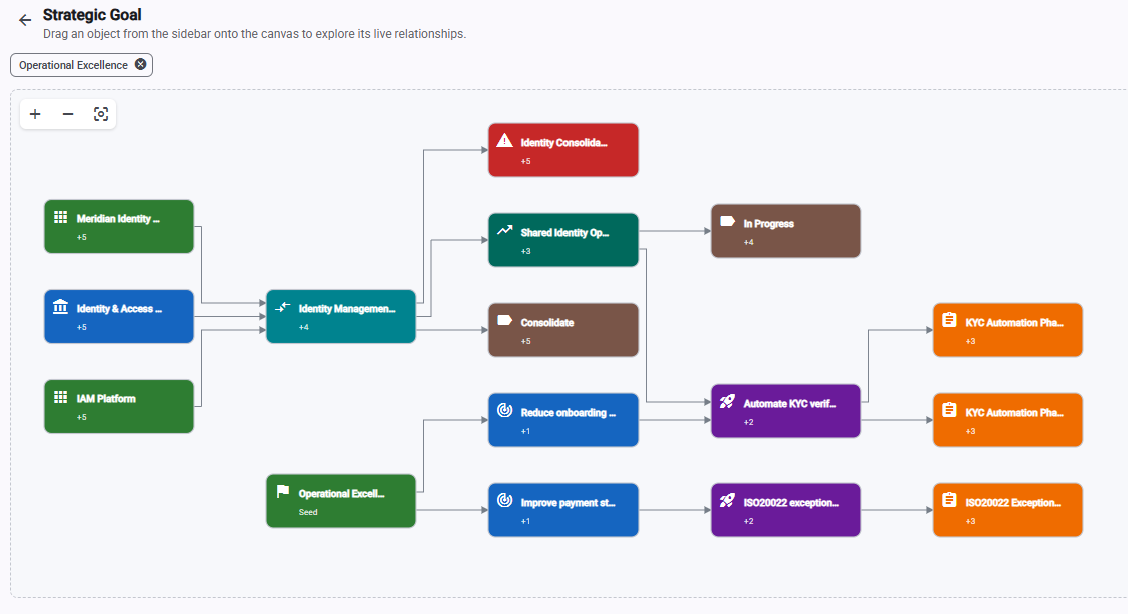
Relationship Explorer, connected repository views, saved queries, and contextual comparisons help business analysts trace dependencies across processes, applications, capabilities, people, data, and organizational structures. GlobeArc lets analysts follow those relationships beyond the first connection so they can see what depends on what and where a proposed change may have wider effects.
Because those relationships draw from the same connected enterprise information, analysts do not have to piece together dependencies from separate diagrams, spreadsheets, and systems. This makes it easier to uncover connections that may otherwise remain hidden until later in a project.
How Do Business Analysts Perform Impact Analysis?
Impact analysis starts by tracing what depends on the thing being changed. GlobeArc helps analysts explore connected processes, applications, capabilities, data, organizational structures, and other relationships before a proposed change is evaluated or approved.
For example, changing or retiring an application may prompt questions such as:
- Which processes use it
- Which capabilities rely on it
- What other systems connect to it
- Which organizational areas could be affected
- What data or information relationships need to be considered
- Whether the impact differs across locations or organizational units
This gives analysts a clearer basis for identifying affected stakeholders, refining requirements, and raising dependencies before they become implementation problems.
How Can Analysts Map Relationships Between Processes and Systems?
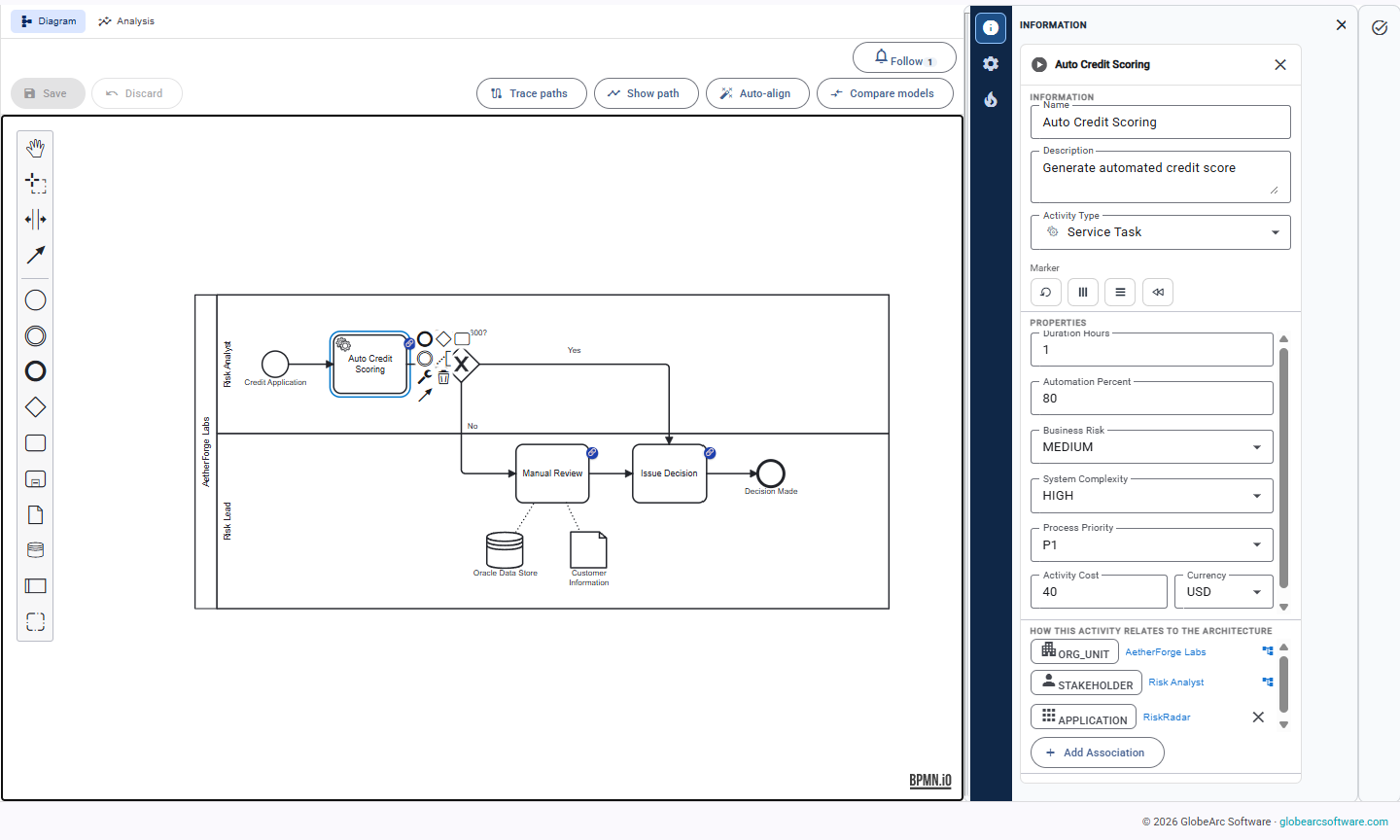
Linking process activities to applications and other repository information shows where technology participates in the work. GlobeArc's native BPMN process models can connect activities and lanes to the same enterprise records used elsewhere in the platform.
That lets business analysts move between the process view and the supporting enterprise information without maintaining separate relationship maps. A process can show how work happens while the repository provides additional context about the systems, people, data, and organizational structures involved.

How Can Business Analysts Visualize Processes?
Native BPMN modeling gives analysts a structured way to visualize how work moves through people, systems, and organizational areas. Existing BPMN models and Visio diagrams can be imported, new models can be created directly, and a reviewable first draft can be generated from a plain-language description.
Process visualization is therefore one part of a broader analysis environment rather than the entire purpose of the platform. The value for business analysts comes from being able to connect the process to the enterprise information needed to understand dependencies and change impacts.

Can Business Analysts Ask Enterprise Questions in Natural Language?
Authenticated users can use compatible AI assistants to ask questions about enterprise information in natural language through GlobeArc's MCP capability. The AI does not receive unrestricted database access. Analysts can also use the Ask feature inside GlobeArc to ask the same questions without leaving the platform.
GlobeArc validates and authorizes the request through its controlled query pathway, applies user permissions and tenant boundaries, and returns information the user is allowed to access. For business analysts, this creates another way to investigate the enterprise without requiring every question to begin with a manually constructed query.

How Does Connected Data Improve Business Analysis?
A shared source of enterprise information gives analysts a more reliable basis for evaluating relationships, dependencies, and potential impacts. In GlobeArc, applications, processes, capabilities, stakeholders, and other records can be examined in context instead of being treated as isolated facts.
Using the same underlying information across different views also reduces time spent reconciling duplicate or conflicting records. Analysts can focus more on what a change means for the business and less on determining which version of the data is correct.

How Can Business Analysts Query Enterprise Information?
Queries let analysts investigate specific business questions without manually assembling information from several sources. GlobeArc supports saved queries and structured reporting against its connected repository, giving analysts another way to examine relationships, properties, and enterprise context.
This can support questions such as:
- Which applications support a particular capability
- Which processes are connected to a specific system
- Where ownership information is missing
- Which objects appear in a particular organizational context
- What changes between Current and Target states
Because the query works against connected enterprise information, the answer can draw on relationships that would otherwise require manual cross-referencing.
How Can Business Analysts Support Requirements and Change Initiatives?
Requirements become stronger when they reflect the systems, processes, people, data, and dependencies surrounding the proposed change. GlobeArc gives analysts enterprise context that can help uncover affected areas before requirements are finalized.
That context can support:
- Stakeholder identification
- Current-state analysis
- Dependency investigation
- Impact assessment
- Process analysis
- Requirements discovery
- Transformation planning
- Current and Target-state comparison

Understand What a Change Will Affect Before It Moves Forward
Business analysts are often asked to explain how something works, who depends on it, and what could happen if it changes. GlobeArc gives you a connected way to investigate those questions across processes, systems, people, data, capabilities, and organizational context.
With enterprise search, relationship exploration, dependency analysis, process visualization, structured queries, and natural-language access to permitted information, business analysts can build a clearer picture of the business before recommending what should happen next.
We’re here to help you bring clarity to complexity.