
Enterprise Architects
Enterprise Architects
Enterprise Architecture Software for Enterprise Architects
Enterprise architects need to answer two questions constantly: What breaks if we change this, and what should we retire? GlobeArc gives you a connected foundation for answering both by bringing applications, capabilities, processes, data, organizational structures, integrations, and strategic context into the same repository.
Because GlobeArc combines Enterprise Architecture and Business Process Management from the foundation of the platform, architecture decisions can include the processes affected by technology change rather than stopping at the application landscape. That gives you deeper context for rationalization, impact analysis, Target-State planning, and transformation.


What Should Enterprise Architecture Software Do?
Enterprise architecture software should help you move beyond documenting the estate and support defensible architecture decisions. GlobeArc gives enterprise architects connected tools for exploring dependencies, evaluating portfolios, comparing states, modeling change, and investigating the impact of architecture decisions.
You can use the same underlying enterprise information for:
- Application rationalization
- Application landscape management
- Architecture impact analysis
- Target architecture planning
- Dependency analysis
- Transformation planning
- M&A integration
How Do Enterprise Architects Perform Impact Analysis?
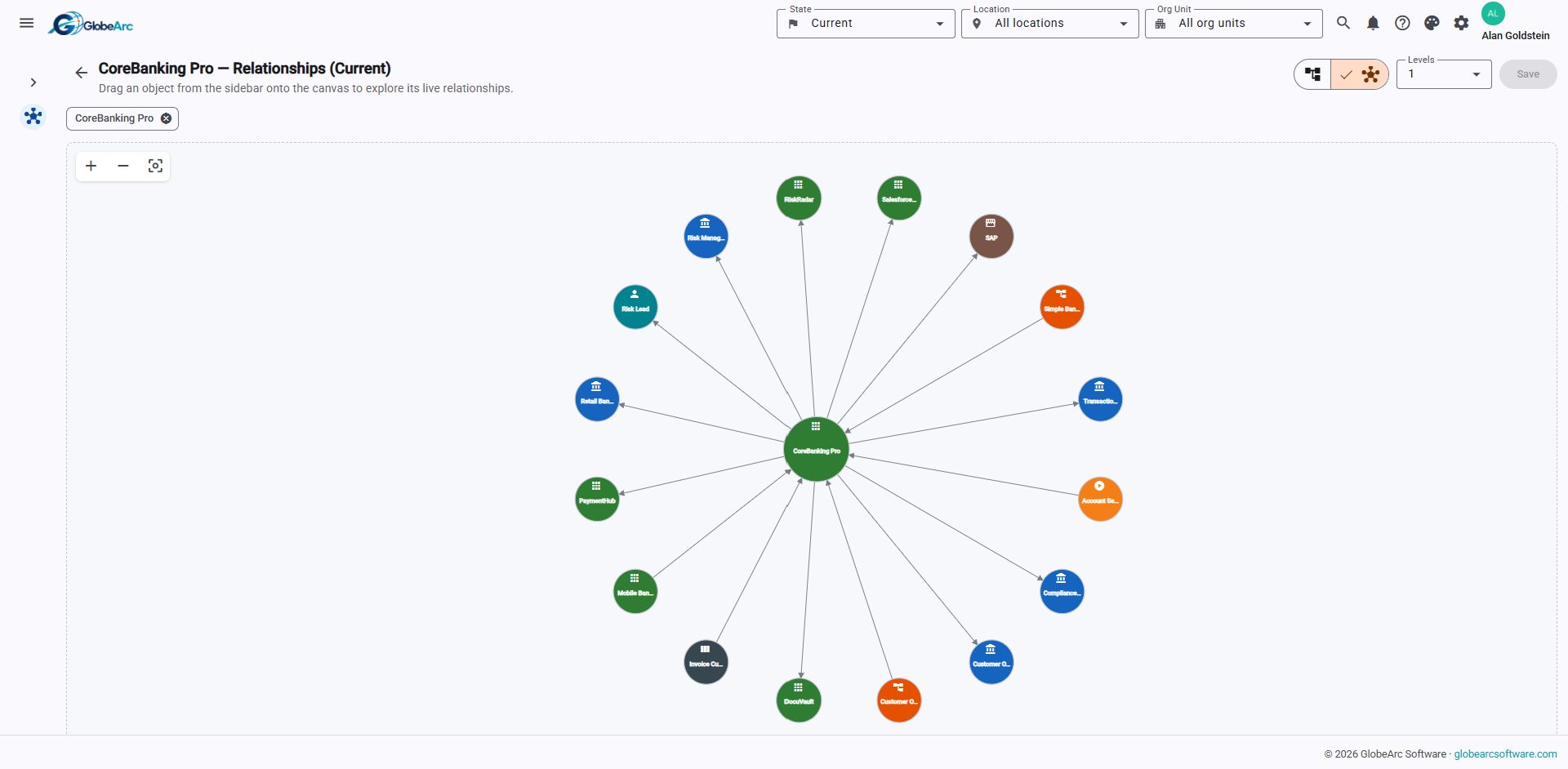
Enterprise architects perform impact analysis by tracing the applications, processes, capabilities, integrations, data, and organizational areas connected to a proposed change. GlobeArc keeps those relationships in the same repository so you can investigate the potential blast radius without rebuilding it from separate diagrams and spreadsheets.
This helps you answer questions such as:
- Which processes depend on this application?
- What capabilities would be affected if it were retired?
- Which applications or integrations rely on it?
- What organizational areas are connected to the change?
- Does the dependency differ by location or organizational unit?
- How would the impact change in the Target state?
Relationship Explorer and connected object records give you a way to follow those dependencies from the original question into the wider enterprise context.

How Can Enterprise Architects Improve Application Rationalization?
Application rationalization becomes more defensible when the recommendation reflects business value, technical fit, cost, capability coverage, dependencies, and data completeness.
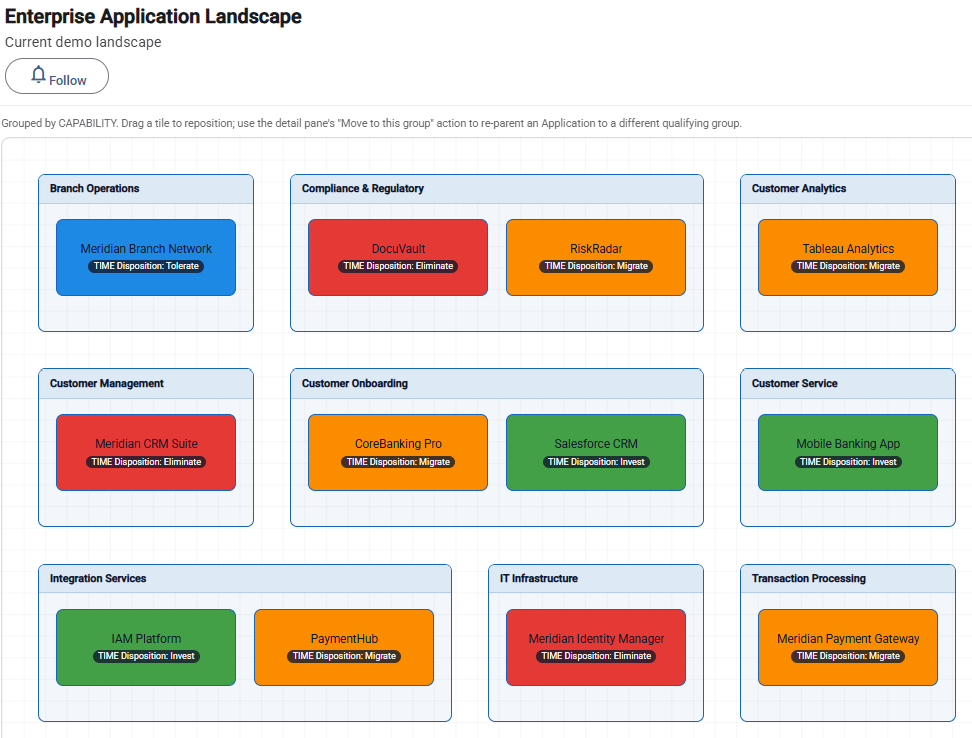
GlobeArc brings those factors into the same decision context so architects can evaluate whether each application should be tolerated, invested in, migrated, or eliminated.
Configurable value scoring uses visible inputs and adjustable weights rather than an unexplained rating.
You can also examine what depends on an application and whether another system already supports the same capability before recommending a disposition.
How Does GlobeArc Support Application Landscape Management?
GlobeArc supports application landscape management by generating views from connected repository information rather than treating the landscape as another diagram that must be maintained separately. Enterprise architects can examine the estate through different grouping dimensions, analytical lenses, and planning contexts.
That makes it easier to investigate:
- Application concentration across capabilities
- Ownership across organizational areas
- Lifecycle and technical-fit patterns
- Integration relationships and criticality
- Areas of application redundancy
- Cost, value, or risk exposure
How Do Current, Interim, and Target States Support Target Architecture Planning?
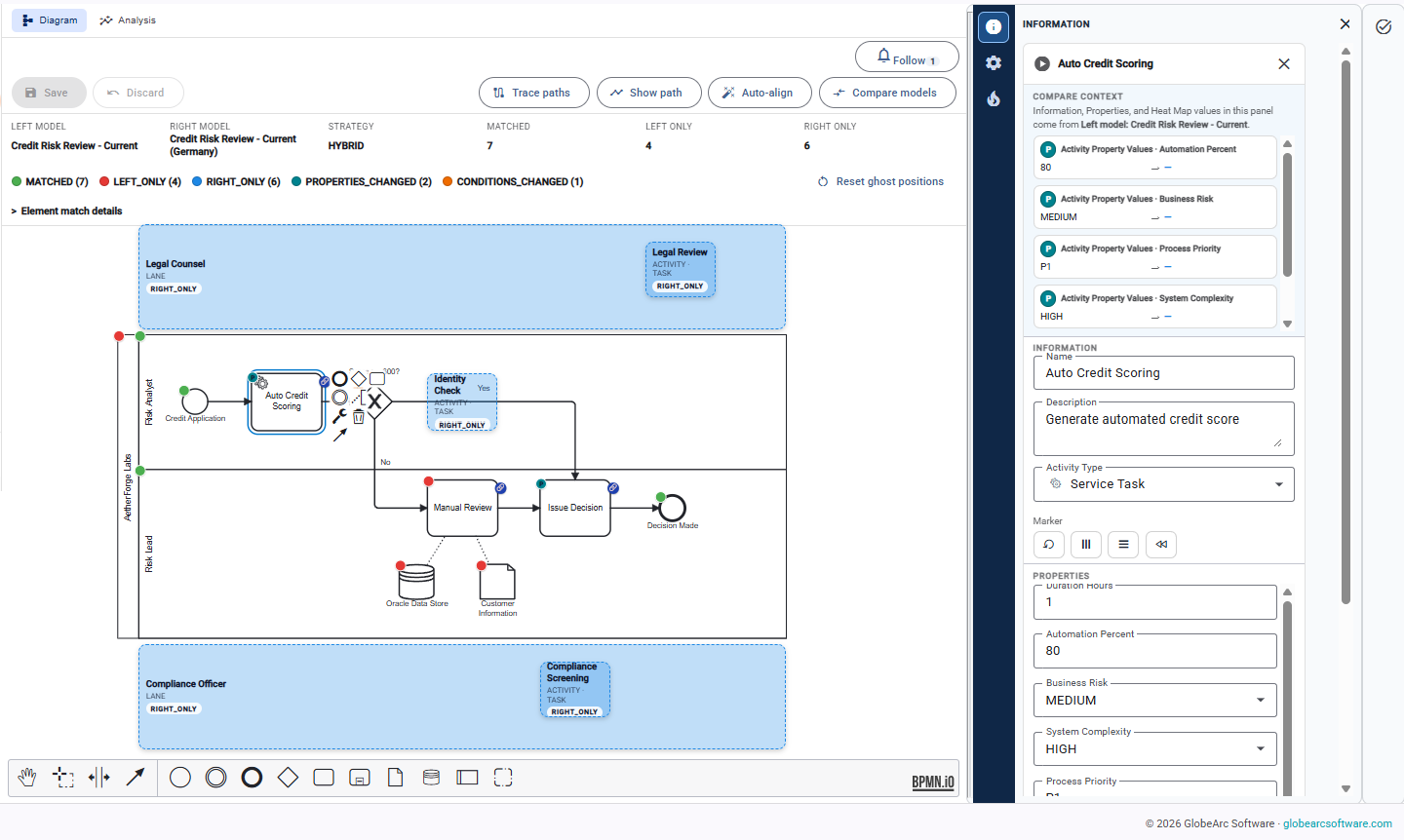
Current, Interim , and Target states let enterprise architects model where the organization is today, where it intends to go, and meaningful stages between them. GlobeArc treats state as part of the repository context alongside Location and Org Unit, rather than requiring the Target architecture to become a disconnected copy of the Current model.
You can use those states to understand:
- What exists in the Current environment
- What needs to change during an Interim stage
- What the intended Target architecture should contain
- Which elements are being added, removed, or changed
- Where property values differ between states
- How plans vary by location or organizational unit
Connected process information can also be compared across contexts, helping architecture and process teams understand how planned technology change affects operations.
How Does a Configurable Metamodel Support Enterprise Architecture?
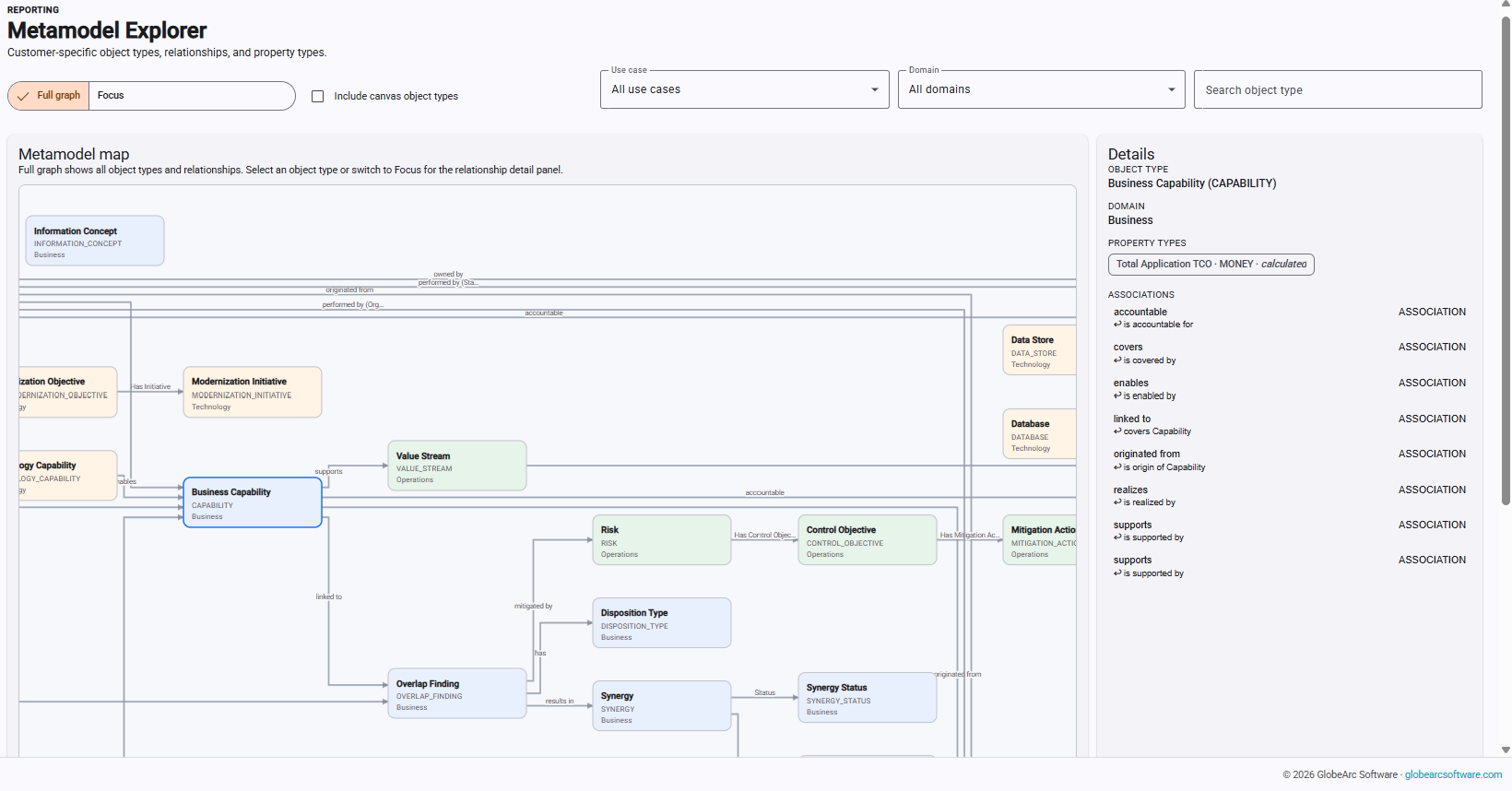
A configurable metamodel helps enterprise architects represent the organization without creating a separate information structure for every use case. GlobeArc uses Objects, Associations, and Properties as the foundation for connecting applications, capabilities, processes, technology, information, strategy, people, and organizational structures.
Because those elements remain part of the same enterprise repository, they can be reused across models, queries, reports, and analysis rather than recreated whenever the architecture question changes.

How Does GlobeArc Support Enterprise Architects During M&A?
GlobeArc supports M&A architecture work by helping enterprise architects examine two technology estates in a connected context. Applications, capabilities, organizational origin, dependencies, and overlap findings can be related so potential consolidation opportunities are easier to investigate.
Architecture teams can use that context to evaluate duplicate applications, disposition decisions, post-merger dependencies, and the intended Target landscape without reducing integration planning to two application inventories placed side by side.

How Do Heat Maps and Value Scoring Support Architecture Decisions?
Heat maps and calculated values help enterprise architects identify where closer investigation is needed. GlobeArc uses a shared heat-map engine across application landscapes, capability maps, value streams, and BPMN process models, allowing analytical lenses to be applied across different views of the enterprise.
Depending on the information being modeled, architecture teams can examine:
- Cost and investment
- Business or technical value
- Technology health
- Risk and concentration
- Capability coverage
- Portfolio completeness
Calculated properties also support weighted formulas and classifications when a decision requires more than a single property or manually assigned rating.
How Do Use Case Blueprints Help Enterprise Architects?
Use Case Blueprints show enterprise architects what information a specific analysis requires and where the existing metamodel has gaps. Instead of beginning with an open-ended configuration exercise, you can see the object types, associations, and properties needed to support a defined business question.
Blueprints can help establish the information foundation for:
- Application rationalization
- Mergers and acquisitions integration
- Vendor concentration and risk analysis
This makes it easier to determine what is already modeled and what still needs to be added before meaningful analysis begins.

How Does GlobeArc Support Transformation Planning?
GlobeArc supports transformation planning by connecting the proposed future state to the applications, processes, capabilities, integrations, and organizational context affected by the change. Enterprise architects can compare Current, Interim, and Target states while keeping those views tied to the same underlying repository.
That helps teams investigate:
- What changes between Current and Target
- Which dependencies could affect transformation
- How Interim states differ from the final Target
- Where plans vary by location or organizational unit
- Which applications, processes, and capabilities are affected

Make Architecture Decisions With Better Evidence
Enterprise architecture tools should do more than help you draw the enterprise. They should help you interrogate it, understand dependencies, compare states, and support decisions that can be explained when challenged.
GlobeArc combines Enterprise Architecture and Business Process Management in one connected platform, giving enterprise architects a common foundation for rationalization, application landscapes, impact analysis, modeling, Target-State planning, and transformation decision support.
We’re here to help you bring clarity to complexity.