What is GlobeArc?
What Is GlobeArc?
Enterprise Architecture and Business Process Management in One Platform
GlobeArc is enterprise architecture and business process management software that connects how an organization is designed with how it actually operates. Strategy, capabilities, processes, value streams, applications, technology, data, people, and organizational structures can be understood as parts of the same enterprise rather than maintained as separate architecture and process documentation.
At the center is one configurable repository built around Objects, Associations, and Properties. The same underlying information can appear in a capability map, BPMN process model, value stream, application landscape, query, report, or heat map. That means enterprise architecture and process management can use the same data, giving teams a more consistent view of dependencies, change, and business context.

Connected View
How Does One Repository Create a Connected View?
Many architecture environments require information to be synchronized between products, modules, or independently maintained models. GlobeArc takes a different approach.
Process models, capability maps, value streams, application landscapes, reports, queries, and analytics draw from the same underlying repository. When an application, capability, stakeholder, or other object is used in multiple places, those views can reference the same record rather than creating another copy.
This provides a common foundation for business architecture, process architecture, application architecture, and transformation planning.

Objects
Objects represent the things the organization needs to understand, such as applications, capabilities, processes, stakeholders, organizational units, initiatives, and value stream stages.

Associations
Associations describe how those objects connect. Applications can support capabilities, organizational units can perform capabilities, stakeholders can participate in value streams, and initiatives can realize capabilities.

Properties
Properties provide the information needed to describe and analyze those objects and relationships. They can also support calculated values, classifications, reporting, and other forms of analysis.

Enterprise Architecture and Business Process
How Are Enterprise Architecture and Business Process Management Connected?
Enterprise architecture describes how the different parts of an organization fit together. Business process management examines how work is structured and performed. In practice, the two depend on much of the same information.
A process is performed by people and organizational units. Its activities can depend on applications and information. Those applications support business capabilities, while capabilities contribute to value streams and strategic objectives. Separating these domains makes it harder to understand the impact of change across them.
GlobeArc connects process architecture and enterprise architecture through shared information and relationships. Teams can move from a process to the applications, stakeholders, organizational units, capabilities, and other objects associated with it without rebuilding that context in another tool.
How Does GlobeArc Model Current and Target States?
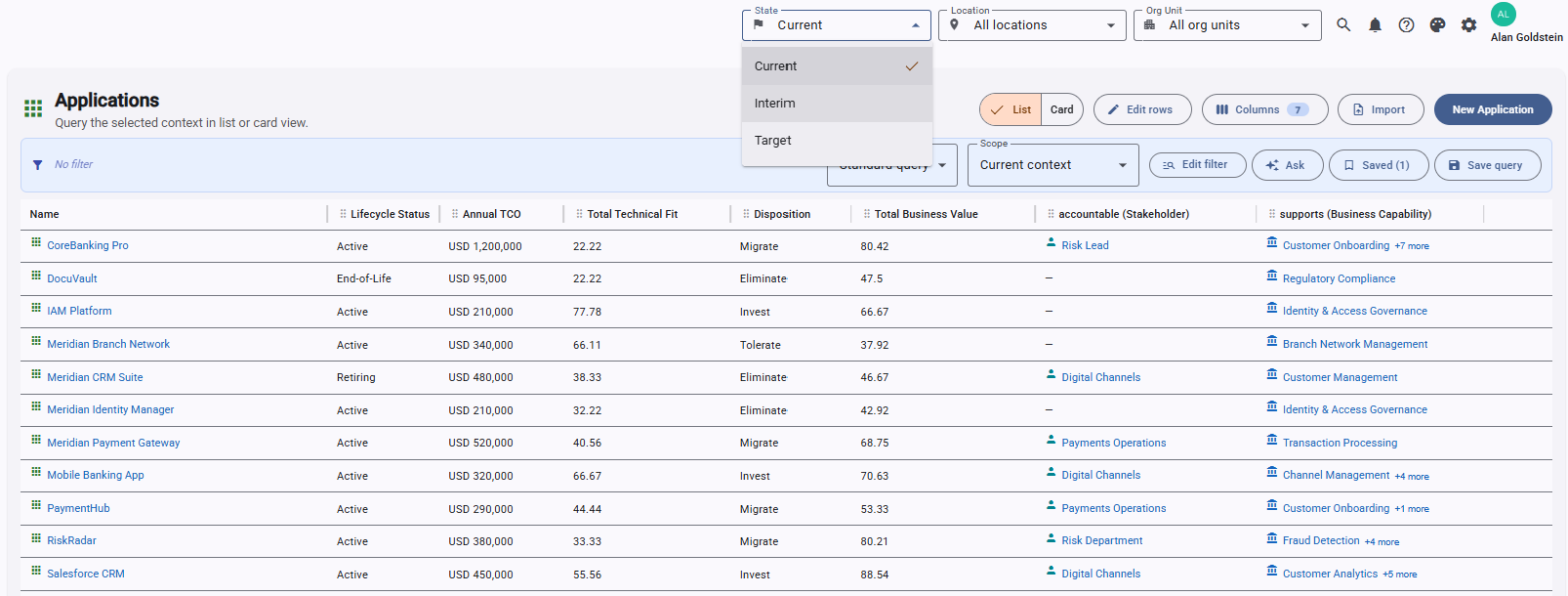
GlobeArc treats State as part of the architecture context rather than requiring teams to maintain Current and Target as unrelated diagrams or a separate scenario exercise. Current, Interim, and Target states can use the same underlying architecture structure, allowing teams to compare what has been added, removed, or changed without maintaining parallel copies.
Location and Org Unit add another layer of context, so the same architecture can reflect legitimate differences across geographies and organizational structures. This makes Target-State planning part of the repository itself rather than a separate modeling exercise.
How Do Use Case Blueprints Simplify Architecture Setup?
An enterprise metamodel needs enough structure to answer useful questions, but starting with an extensive modeling exercise can make adoption unnecessarily difficult.
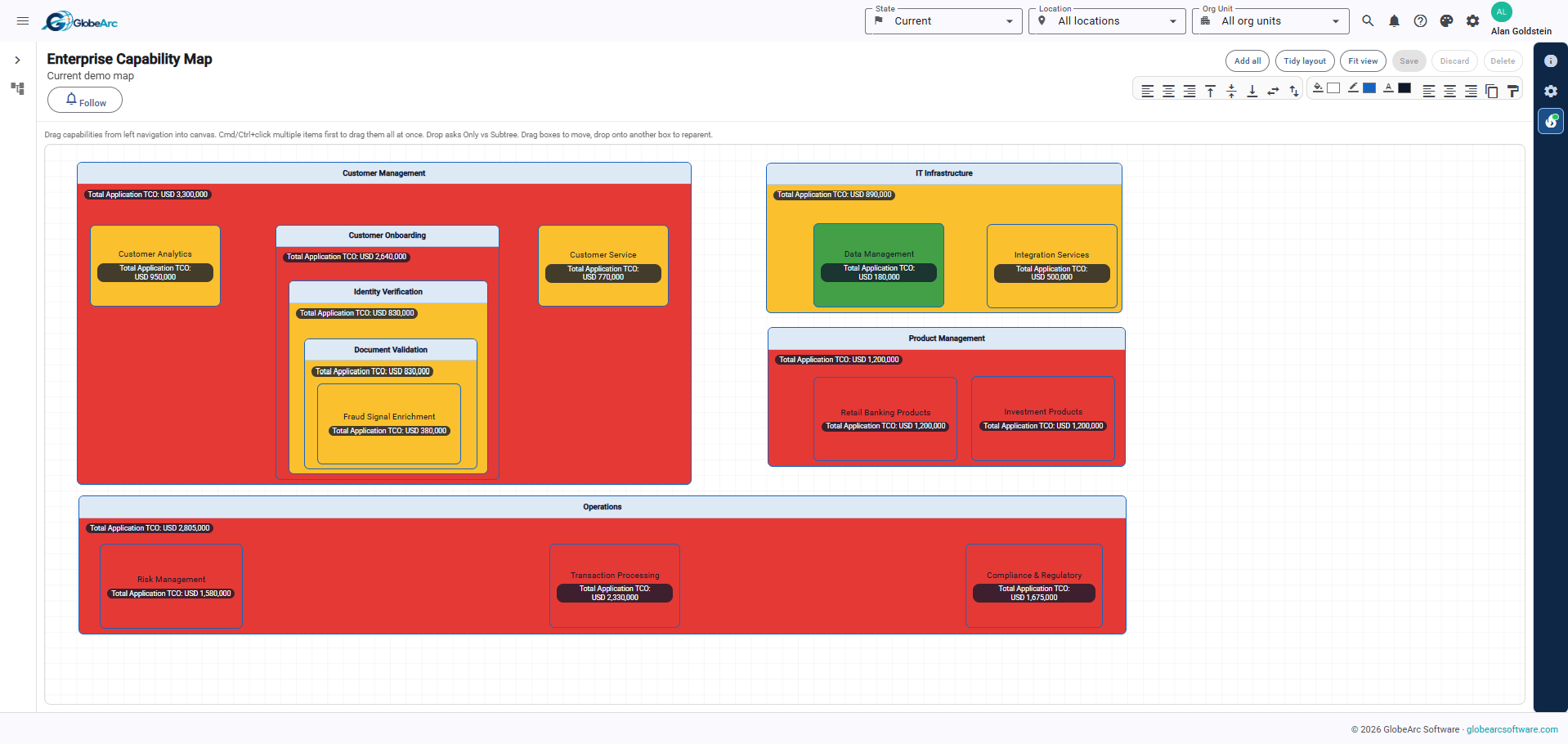
GlobeArc Use Case Blueprints begin with the decision or problem a team wants to address. They identify the object types, relationship types, and properties required for that use case, show where the existing metamodel has gaps, and help establish missing elements.
This gives organizations a guided way to develop the architecture information they need without making a large upfront modeling exercise the starting point.
How Does GlobeArc Use Shared Analytics Across Architecture Models?
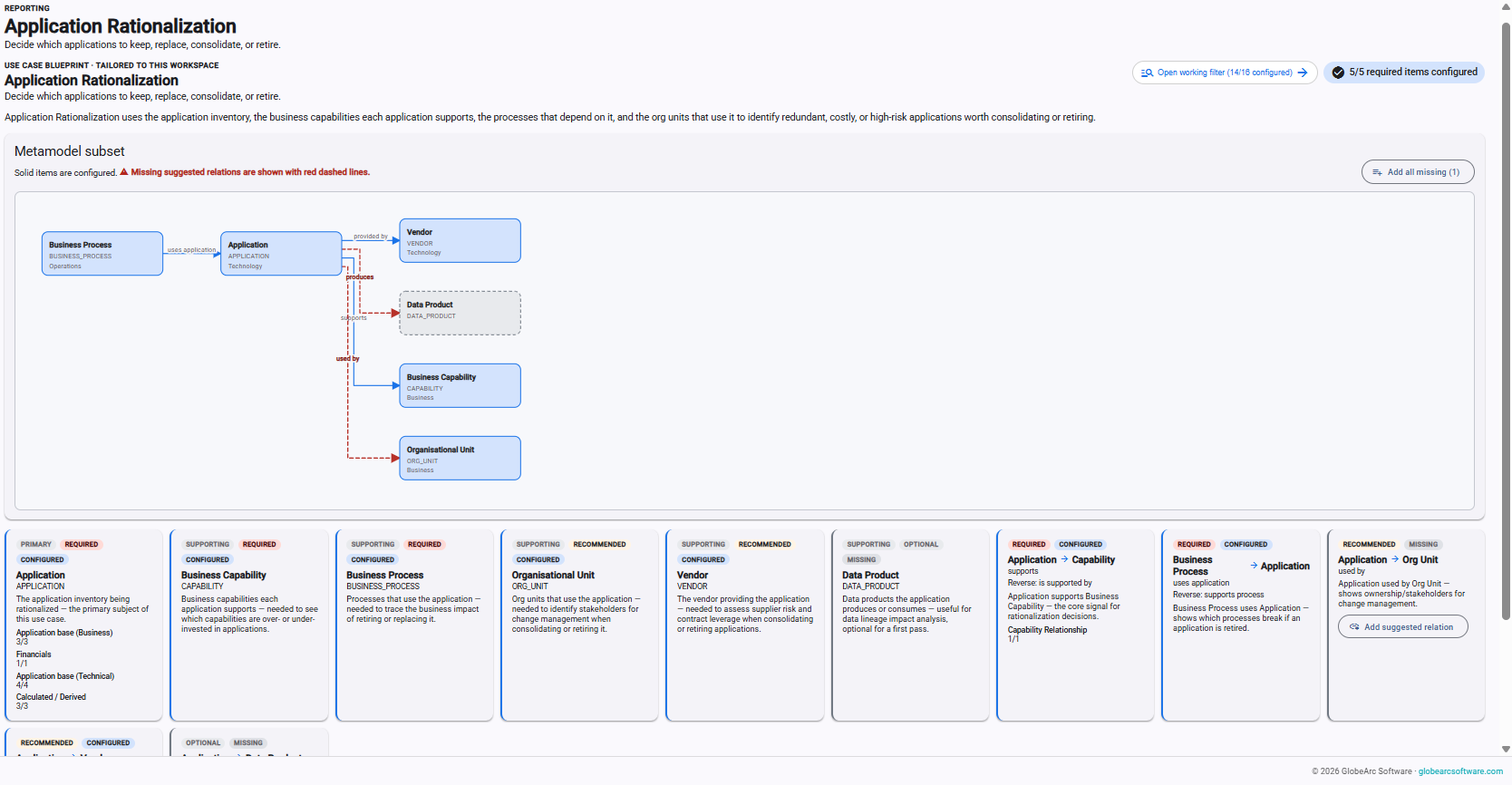
GlobeArc uses a shared heat-map engine across different visual model types, including business capability maps, value streams, BPMN process models, and application landscapes.
The advantage is consistency. Teams do not need a completely different analytical mechanism simply because they have moved from a capability view to a process or application view. The analytical lens can follow the question across different representations of the organization.
How Does GlobeArc Approach AI Safety?
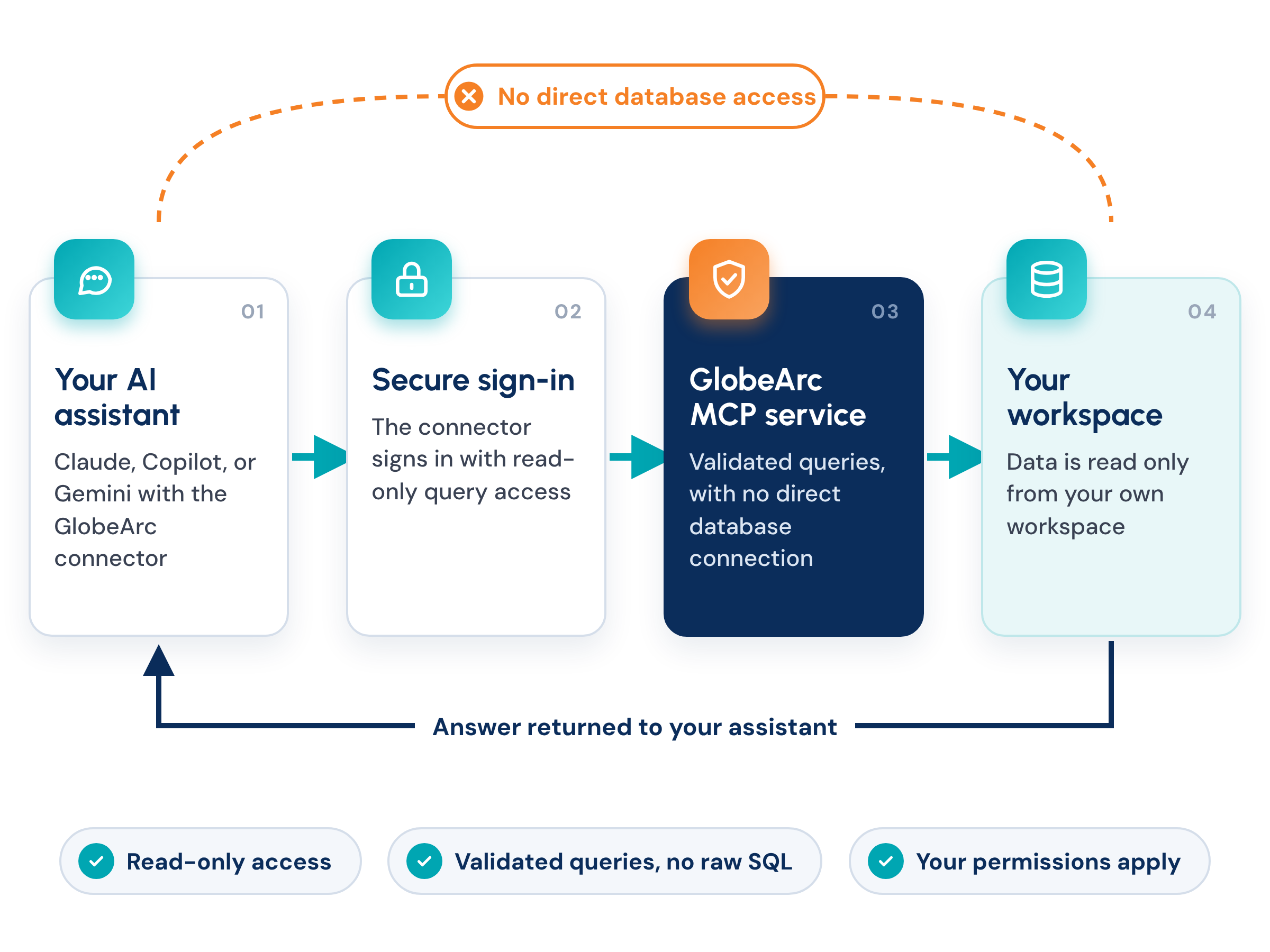
GlobeArc's approach to AI is based on controlling what AI can do with architecture information rather than giving an AI system unrestricted access to the underlying database.
For query access through GlobeArc's MCP capability, requests use a validated Abstract Syntax Tree, or AST, rather than allowing an AI agent to generate executable SQL or GraphQL. The MCP service does not connect directly to the database, and its query scope is read-only regardless of a user's normal application role.
GlobeArc also provides a narrowly scoped BPMN process-model import capability for agent-assisted workflows. That write path uses the same process validation approach as other process imports.
How Is GlobeArc Built for the Cloud?
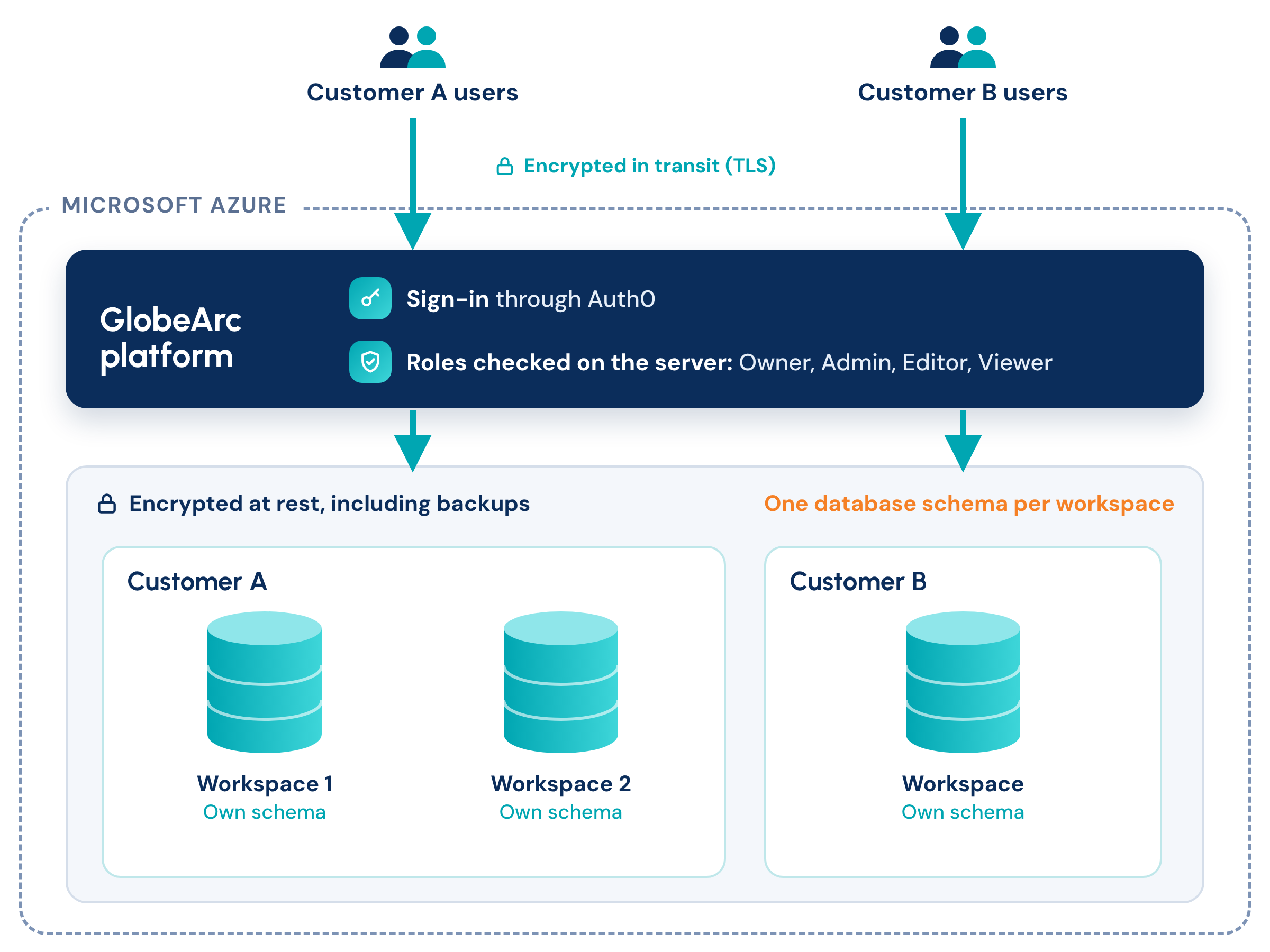
GlobeArc is designed as a multi-tenant SaaS platform rather than as legacy desktop or on-premises architecture software relocated to hosted infrastructure.
It is hosted on Microsoft Azure and uses Auth0 for authentication, with each customer's data isolated in its own database schema, role-based permissions enforced on the server, and automated, version-controlled infrastructure and deployment.
The result is a platform architecture designed around modern SaaS operations while maintaining separation between customer data and enforcing access controls at the application layer.
What Makes It Different
What Makes GlobeArc Different From the EA and BPM Tools We Already Know?
GlobeArc is not trying to differentiate simply by offering another diagram type or claiming that enterprise architecture and process modeling belong in the same product. The more important distinction is that different views of the organization can originate from the same connected information.
That changes how teams work with architecture. A capability map doesn't need its own version of an application. A BPMN model doesn't have to invent another representation of an organizational unit. A value stream doesn't need to recreate capabilities that already exist elsewhere. The same objects and relationships can provide context across each view.
The result is a connected enterprise architecture and process environment built around several principles:
Repository
One repository for architecture and process information
Objects
Configurable Objects, Associations, and Properties
Planning States
Native Current, Interim, and Target state contexts
Analytics
Shared analytics across multiple visual model types
Use Case Blueprints
Guided metamodel setup through Use Case Blueprints
Controlled AI Access
Controlled AI access designed around validated queries and scoped permissions
SaaS Architecture
Cloud-native SaaS architecture
Process Simulation
Simulation and Current vs Target process analysis
GlobeArc doesn’t aim to replace every specialist modeling, process mining, GRC, or project portfolio management capability. Its focus is connecting enterprise information so architects, process teams, transformation leaders, and decision-makers can understand how the organization fits together and what a proposed change could affect.
We’re here to help you bring clarity to complexity.