
Business Architects
Business Architects
Business Architecture Software for Connected Strategy and Execution
Business architects need more than well-designed capability maps and value streams. They need to know whether those models connect to the applications, processes, organizational structures, investments, and strategic priorities that shape how the business actually operates.
GlobeArc was built with Enterprise Architecture and Business Process Management on the same underlying foundation. For business architects, that means capability models and value streams can connect directly to strategy, processes, applications, stakeholders, and organizational context instead of existing as a separate set of diagrams.


What Is Business Architecture Software?
Business architecture software helps organizations model how capabilities, value streams, strategy, organization, information, and change fit together. GlobeArc extends that picture by connecting business architecture directly to the processes and technology that support it.
That gives business architects a stronger basis for answering questions such as:
- Which capabilities support strategic priorities?
- Which applications support each capability?
- Which processes depend on those capabilities?
- Where are capability gaps or overlaps?
- Which organizational areas perform or depend on them?
- What needs to change to reach the Target state?
How Does Business Capability Mapping Connect to Reality?
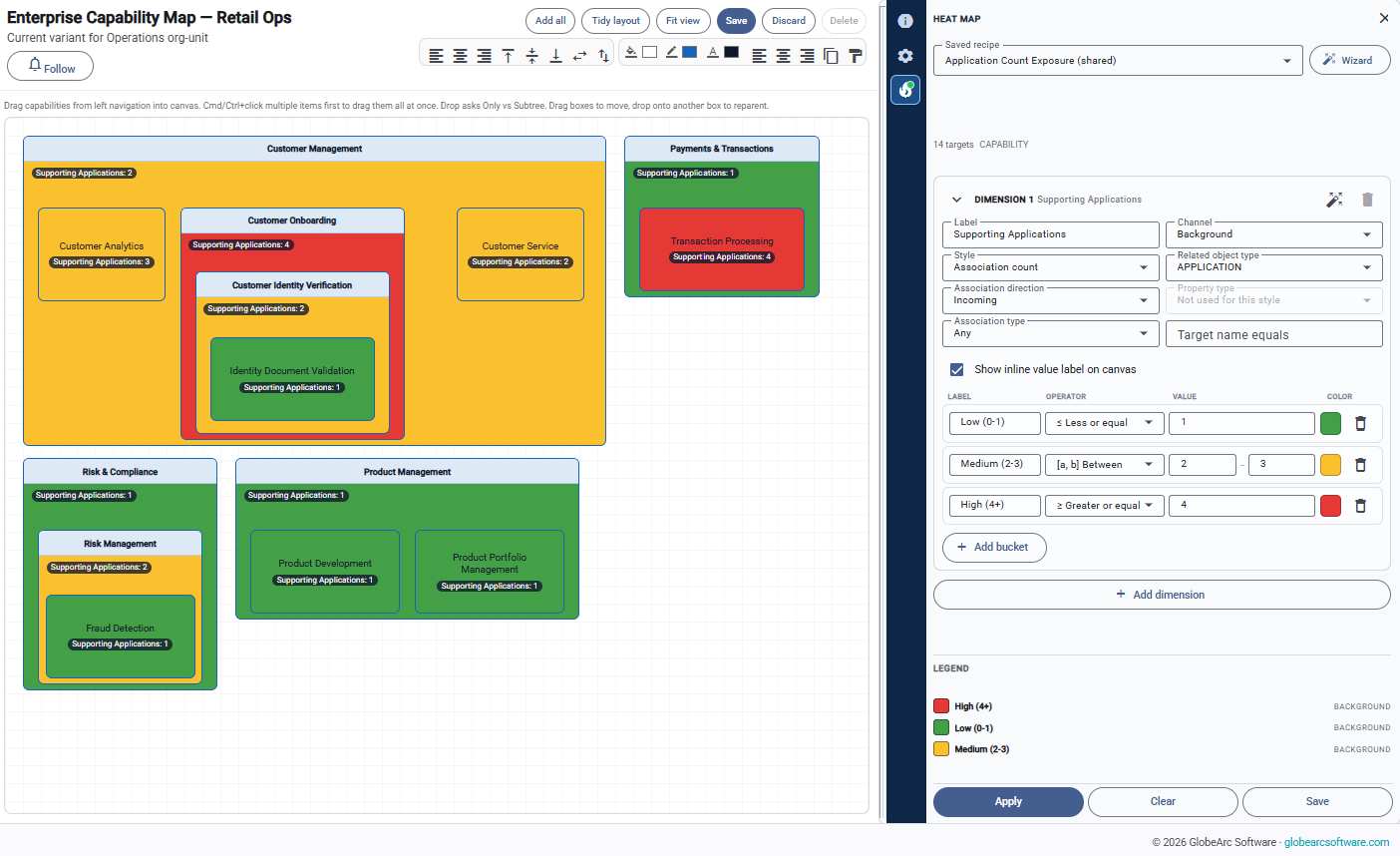
Business capability mapping becomes more useful when each capability is connected to the enterprise information around it. In GlobeArc, a capability is part of the shared repository rather than simply a shape on a diagram.
That means a capability can be related to:
- Applications that support it
- Processes that depend on it
- Value streams it contributes to
- Organizational units associated with it
- Strategic priorities and initiatives
- Information used across the business
This turns the business capability model into a working view of the enterprise rather than a presentation artifact. Heat maps can then be applied directly to the capability map, for example to show where technology cost is concentrated across capabilities.
How Does GlobeArc Support Value Stream Mapping?
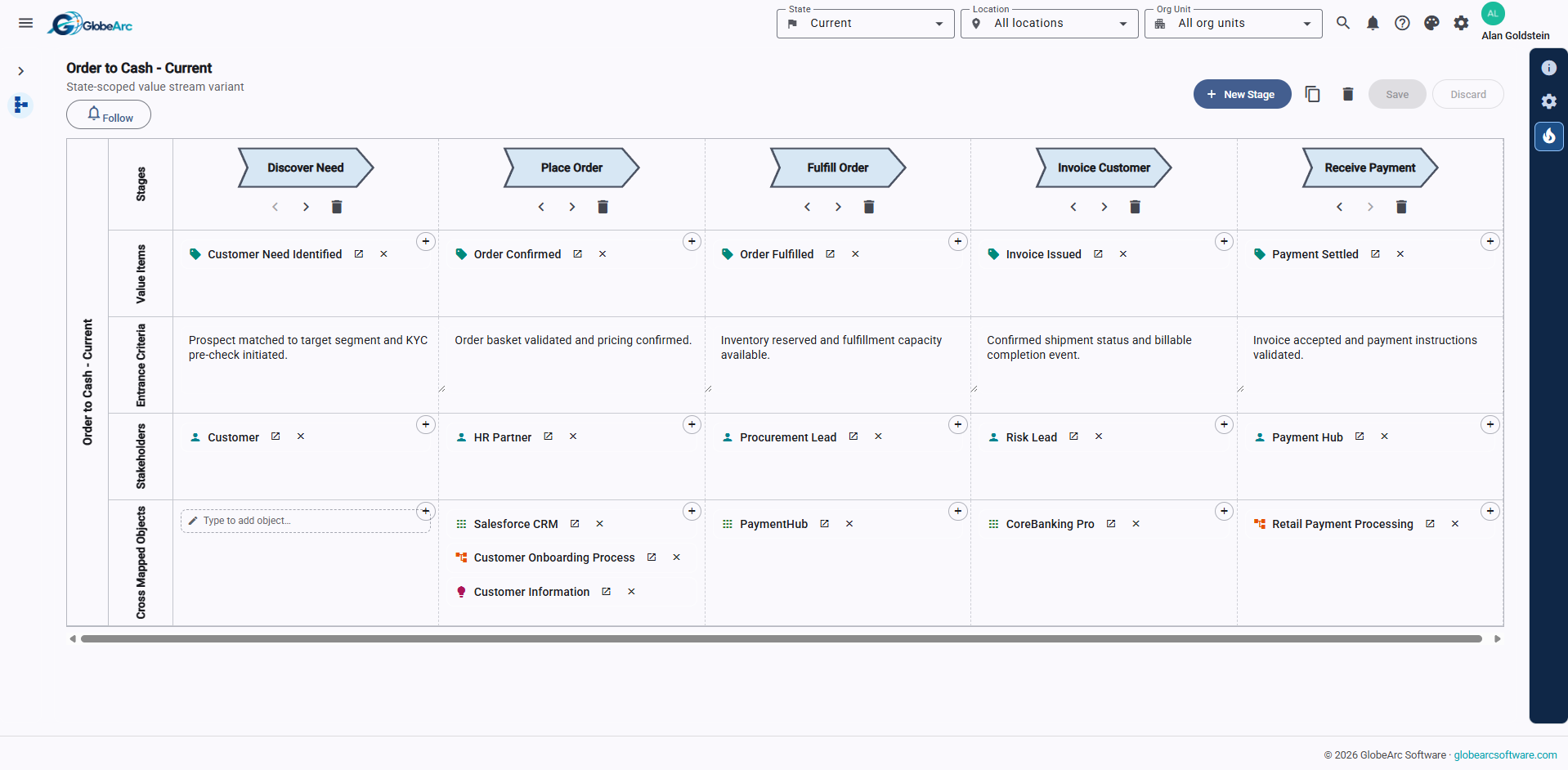
GlobeArc helps business architects model value streams while keeping them connected to the capabilities, stakeholders, processes, and other enterprise information that support value delivery.
Value streams therefore become part of the same business architecture foundation instead of another disconnected diagram.
Business architects can use that connected context to identify where capabilities support value delivery, where important relationships are missing, and where transformation may need to address more than one part of the operating model.
How Do Business Capabilities Connect Strategy and Technology?
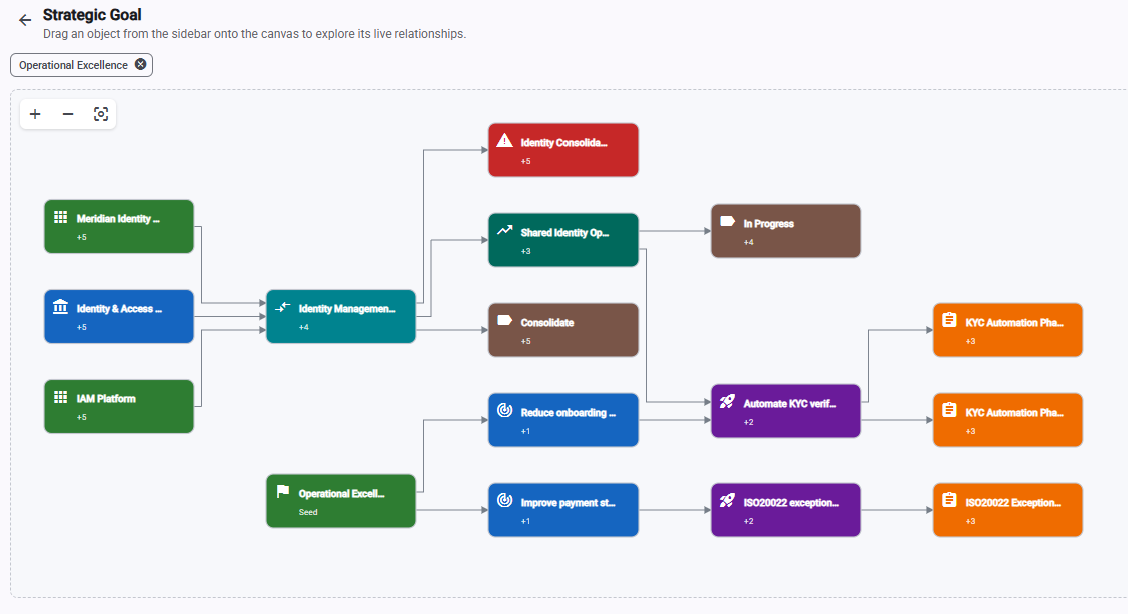
Business capabilities translate strategic priorities into the operational and technology support the organization needs to deliver them. GlobeArc connects capabilities to strategy, initiatives, processes, applications, and investments so business architects can trace how priorities are supported across the enterprise.
This helps answer questions such as:
- Which capabilities does a strategic priority depend on?
- Where is the organization investing in capability change?
- Which applications support strategically important capabilities?
- Where does technology investment lack a clear business connection?
- Which capabilities receive strategic attention but lack sufficient support?
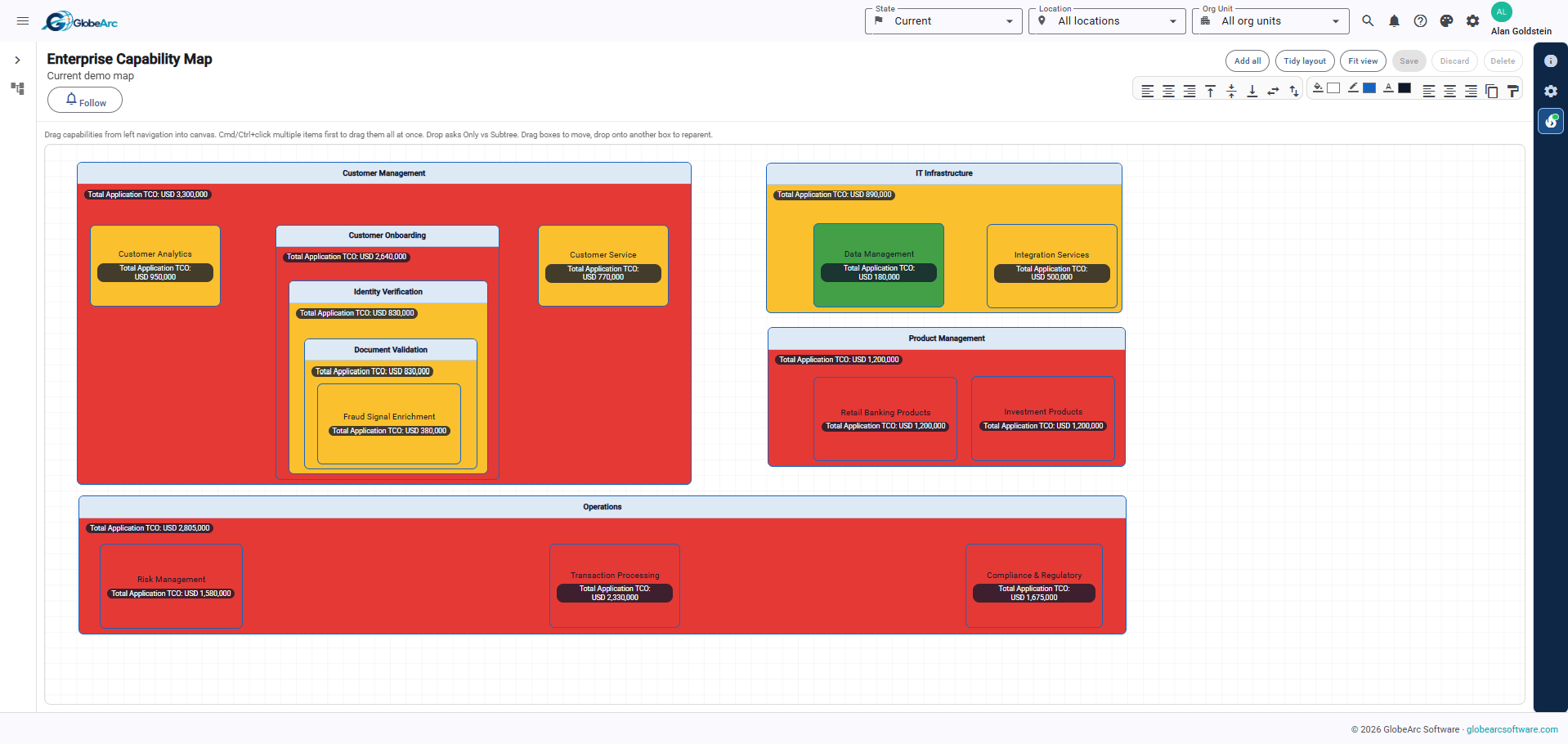
What Is the Difference Between a Capability Map and a Process Map?
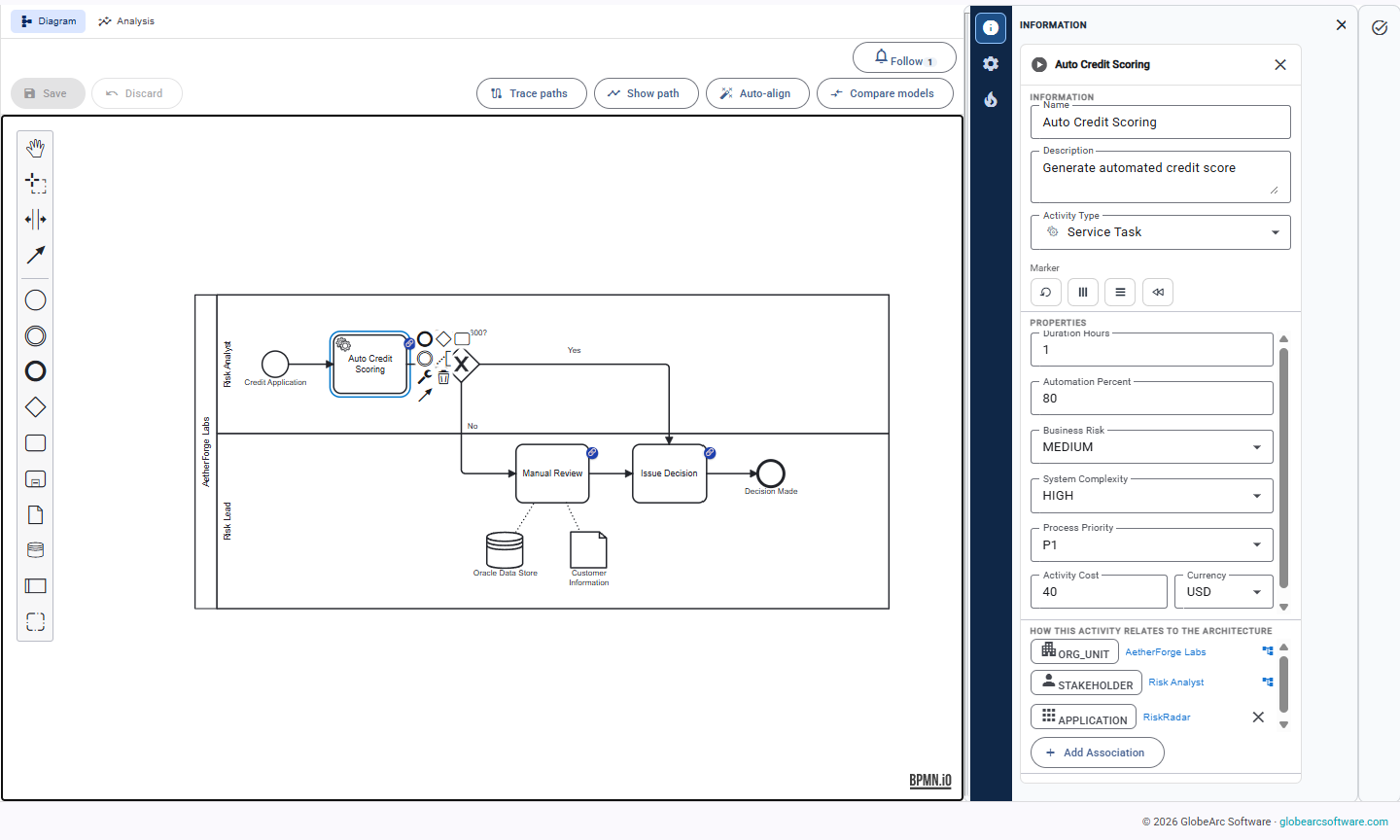
A capability map shows what the organization needs to be able to do, while a process map shows how work is performed. Both perspectives are useful, but they answer different questions.
GlobeArc connects them rather than forcing business architects to choose between them.
Capabilities can provide the stable business structure, while BPMN process models show how work moves through people, systems, and organizational areas.
Because both draw from the same foundation, business and process architecture can reinforce each other instead of developing separately.
Connect Business Architecture to the Operating Model
Business architecture becomes more actionable when organizational context is visible alongside capabilities and value streams. GlobeArc can connect business structures with organizational units, stakeholders, processes, applications, and other enterprise relationships.
That helps business architects understand:
- Which parts of the organization perform key capabilities
- Where the operating model differs across organizational units and locations
- Which capabilities depend on shared technology
- Where responsibilities or dependencies cross organizational boundaries
- How proposed change could affect different areas of the enterprise

How Does Business Architecture Support Strategy to Execution?
A clear line of sight from strategic goals to funded work shows whether the organization is actually investing in the capabilities needed to carry those priorities forward. GlobeArc connects goals, objectives, initiatives, projects, capabilities, processes, and organizational context so business architects can trace where strategy is being supported and where execution is drifting.
This helps reveal:
- Strategic priorities with limited execution activity
- Important capabilities receiving too little investment
- Initiatives with weak links to stated goals
- Projects competing for similar outcomes
- Gaps in ownership or organizational support
Compare Current and Target Business Architecture
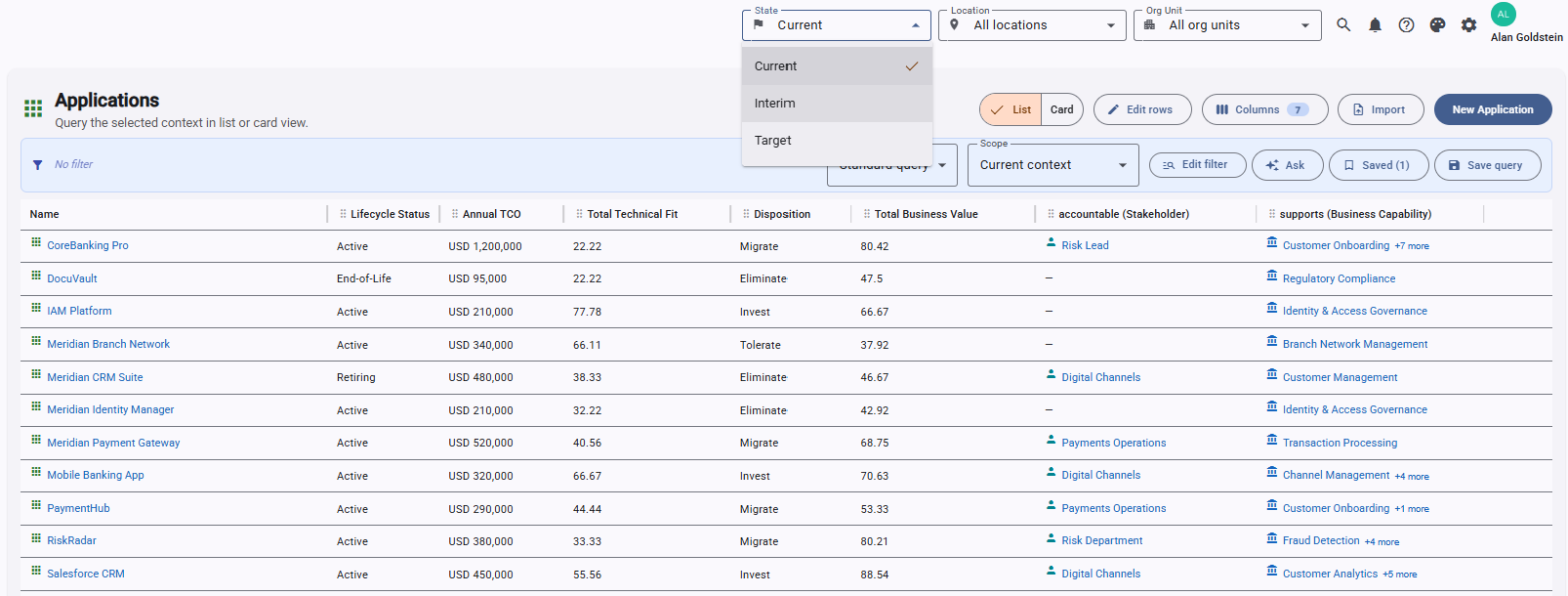
Current, Interim, and Target states help business architects see how the organization needs to evolve rather than documenting only how it operates today. GlobeArc keeps those states within the same connected repository so teams can compare change without maintaining separate copies of the business architecture.
You can use that context to investigate:
- Capabilities being introduced or changed
- Value streams affected by transformation
- Processes that need to operate differently
- Organizational differences between states
- Technology relationships that must change
- Gaps between the Current and intended Target operating model


Identify Gaps and Dependencies Before Transformation
Transformation often fails when a proposed change is considered in isolation. GlobeArc helps business architects trace relationships across capabilities, processes, applications, organizational structures, and strategy before the Target state is approved.
That connected view makes it easier to identify missing support, conflicting dependencies, duplicated capability coverage, and areas where one change depends on another. Business architects can then provide transformation teams with a clearer picture of what the proposed operating model actually requires.
One Repository Instead of Disconnected Business Architecture Diagrams
Capability maps, value streams, process models, application views, and strategy relationships are more valuable when they draw from the same enterprise information. GlobeArc uses one configurable repository so the same capability, process, application, stakeholder, or organizational unit can appear across different views without being recreated each time.
For business architects, that means less effort reconciling separate models and more opportunity to use business architecture as a practical decision tool. GlobeArc connects Enterprise Architecture and Business Process Management so business architecture can sit between strategy, operations, and technology rather than being isolated from all three.
We’re here to help you bring clarity to complexity.